
Last updated November 17, 2026
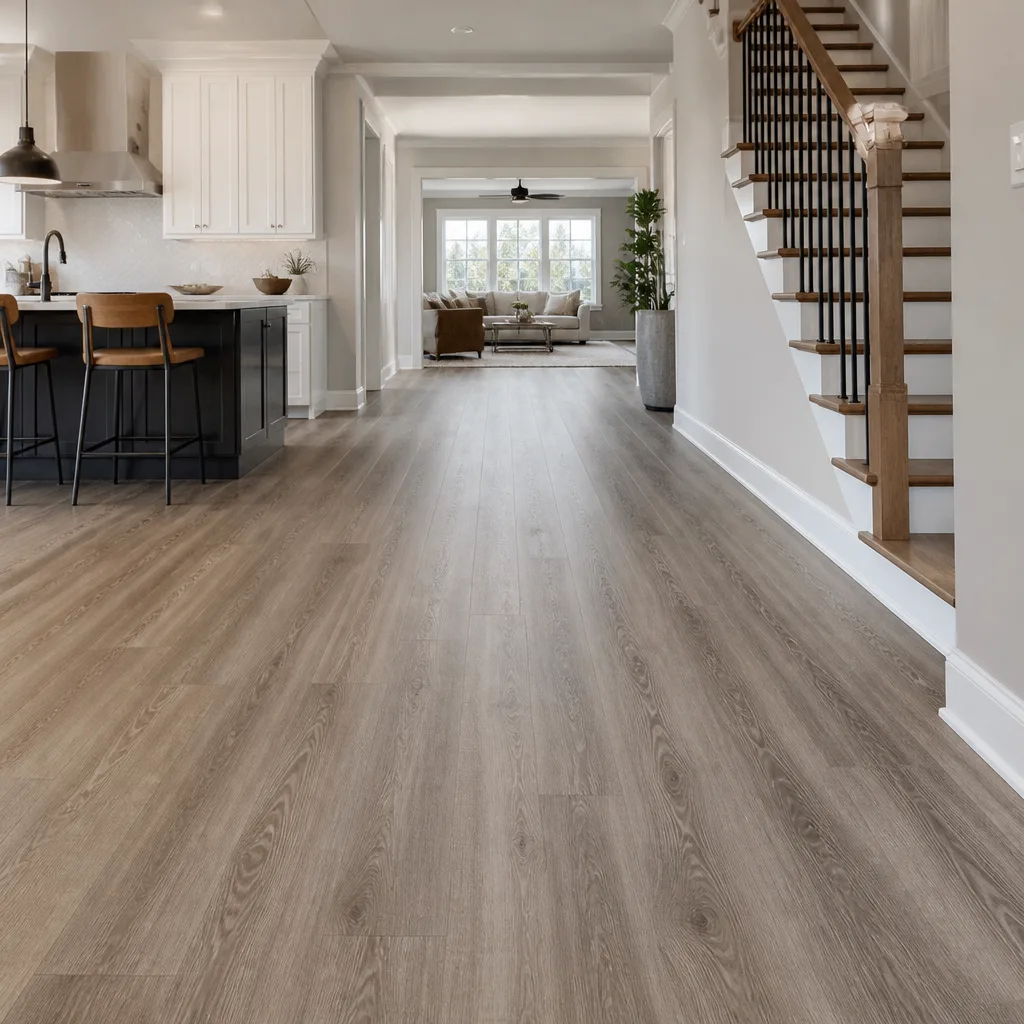 Luxury vinyl plank
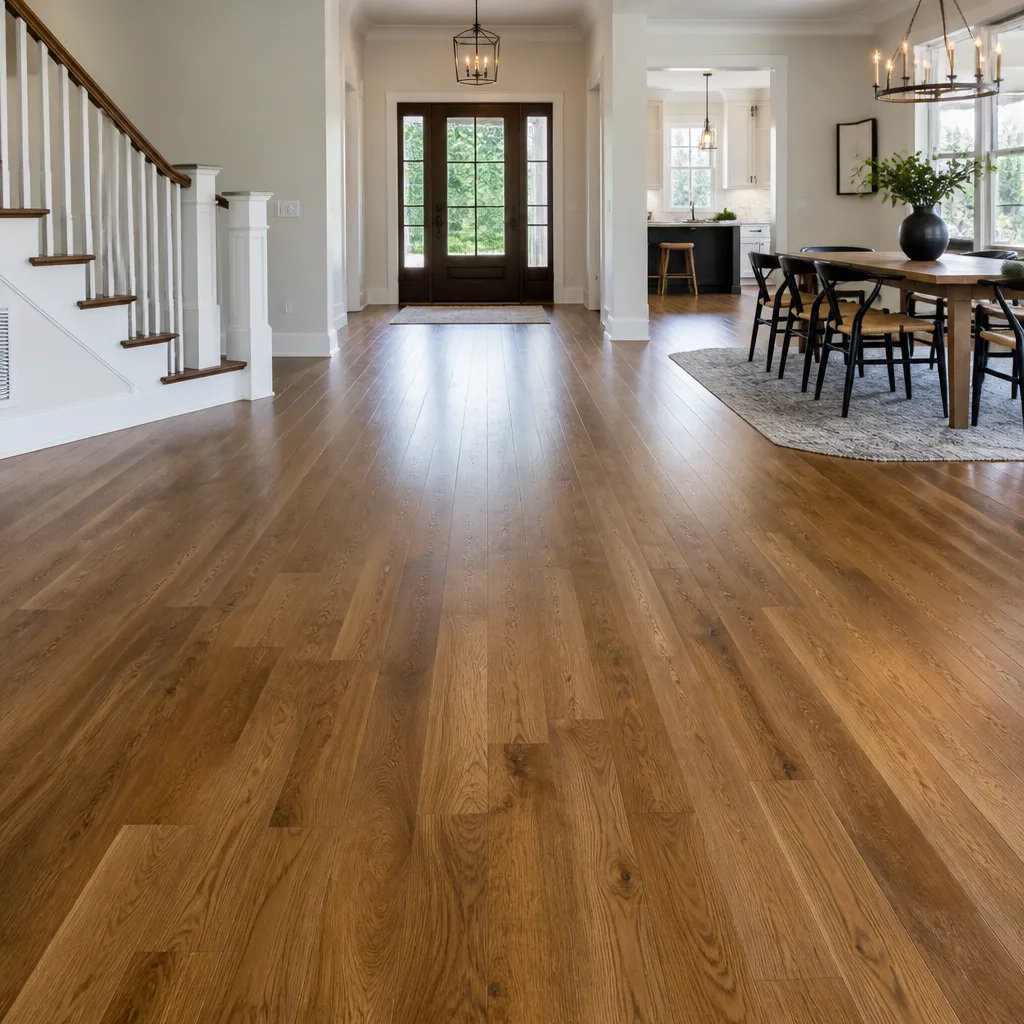 Hardwood
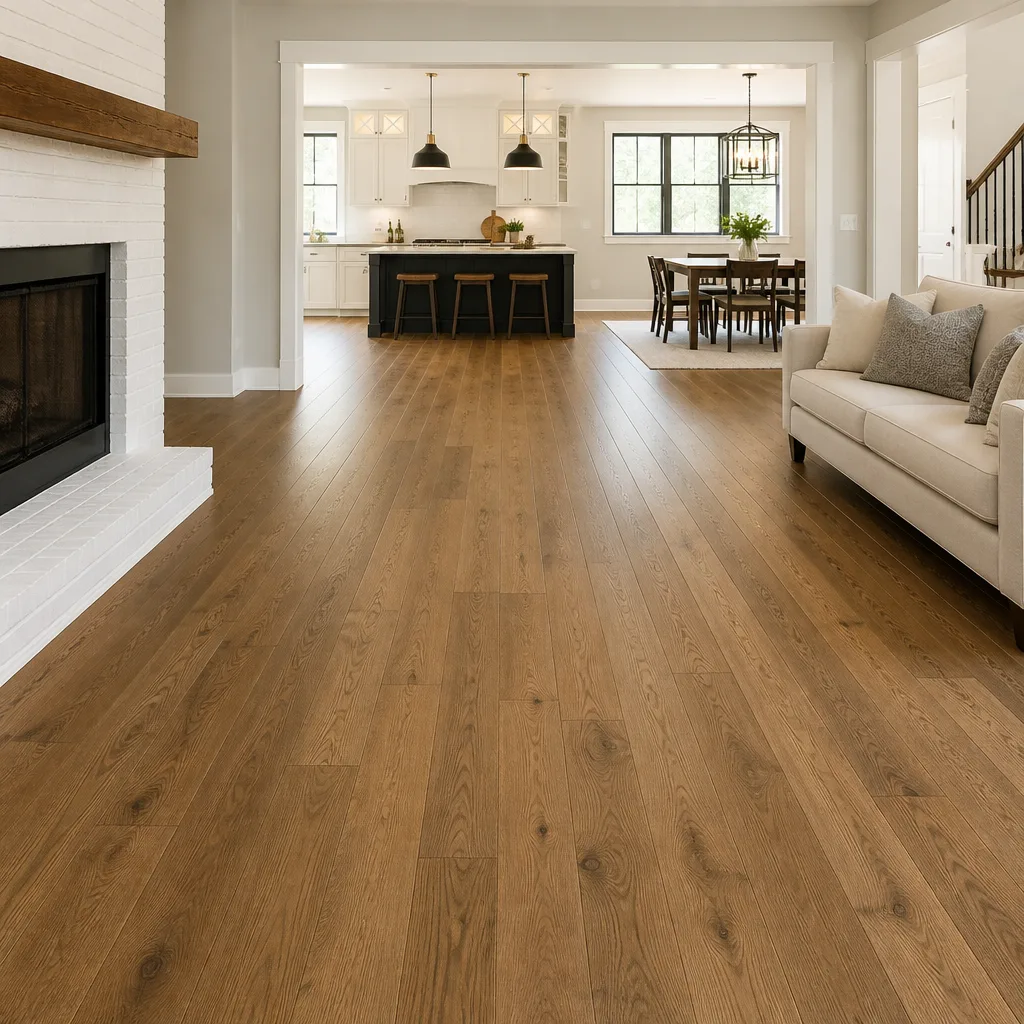 Engineered hardwood
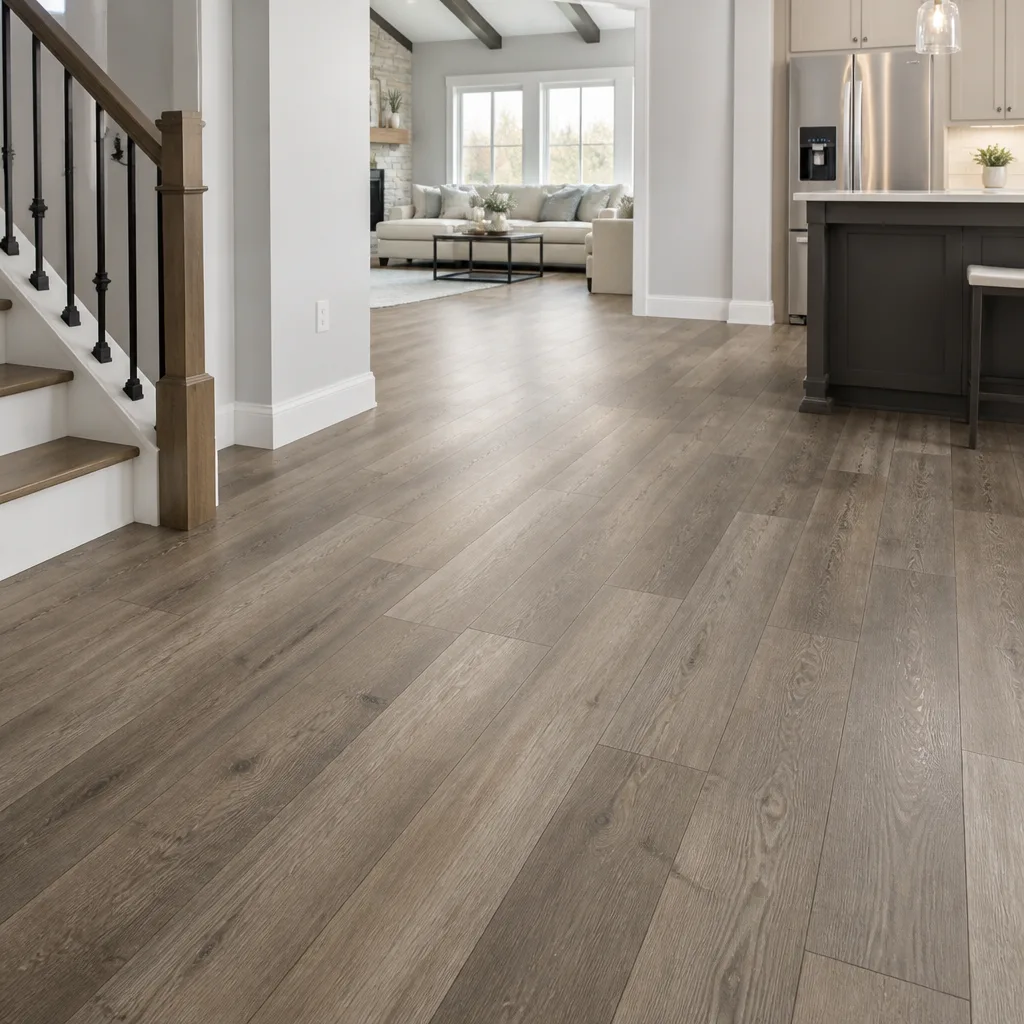 Laminate
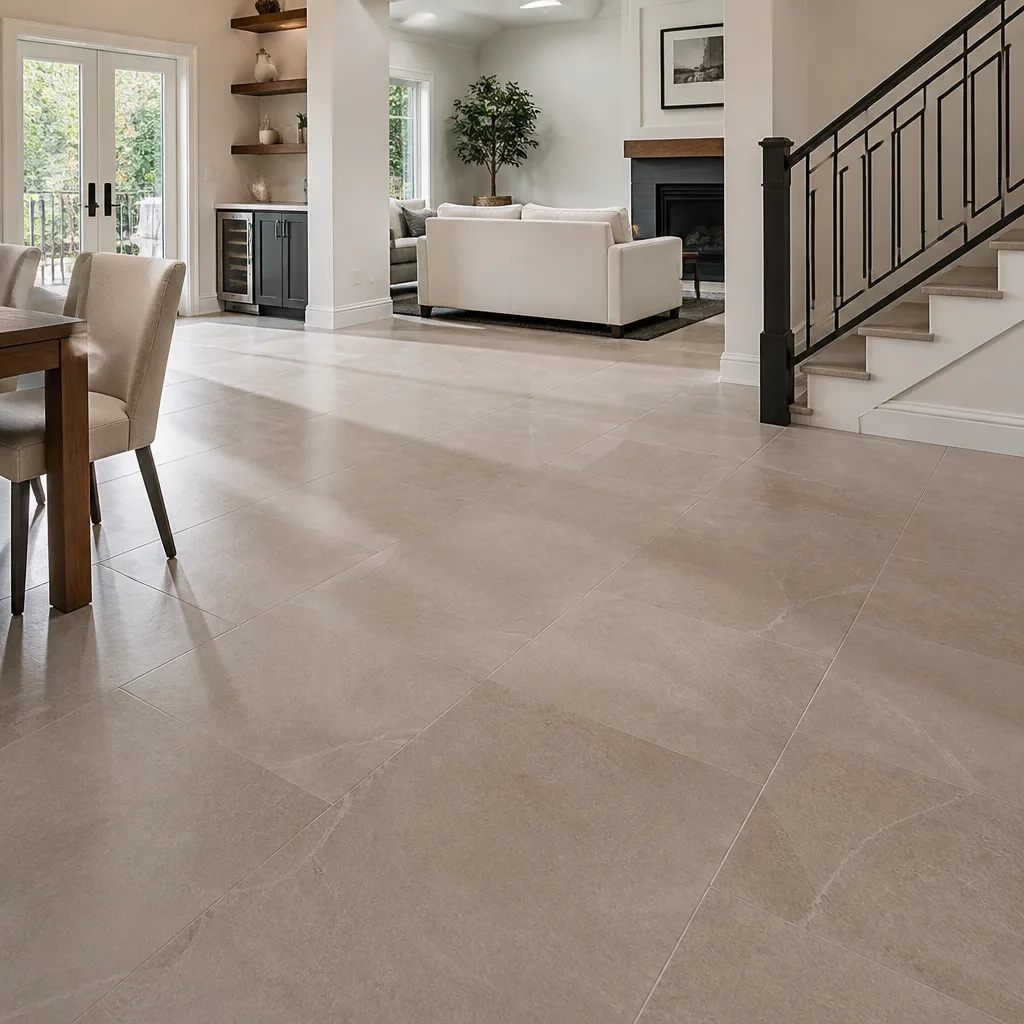 Porcelain tile
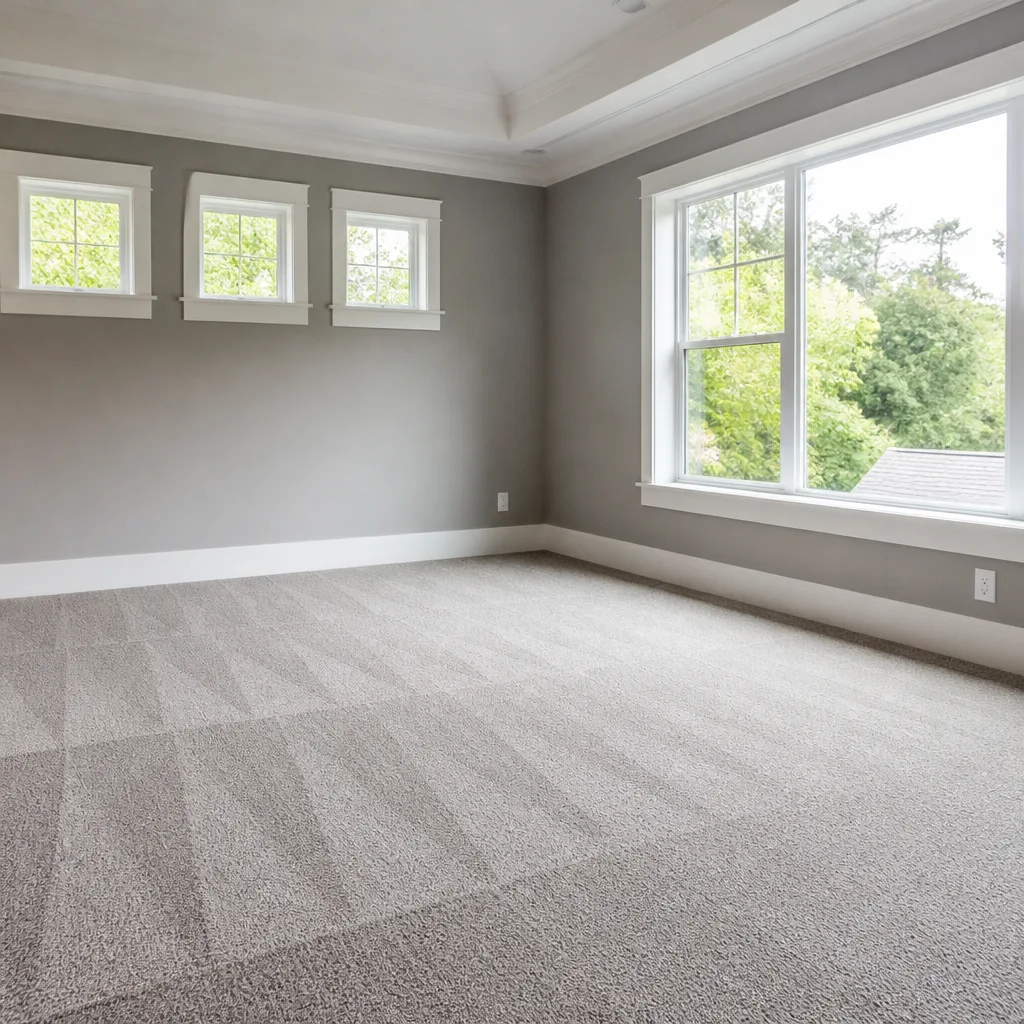 Carpet
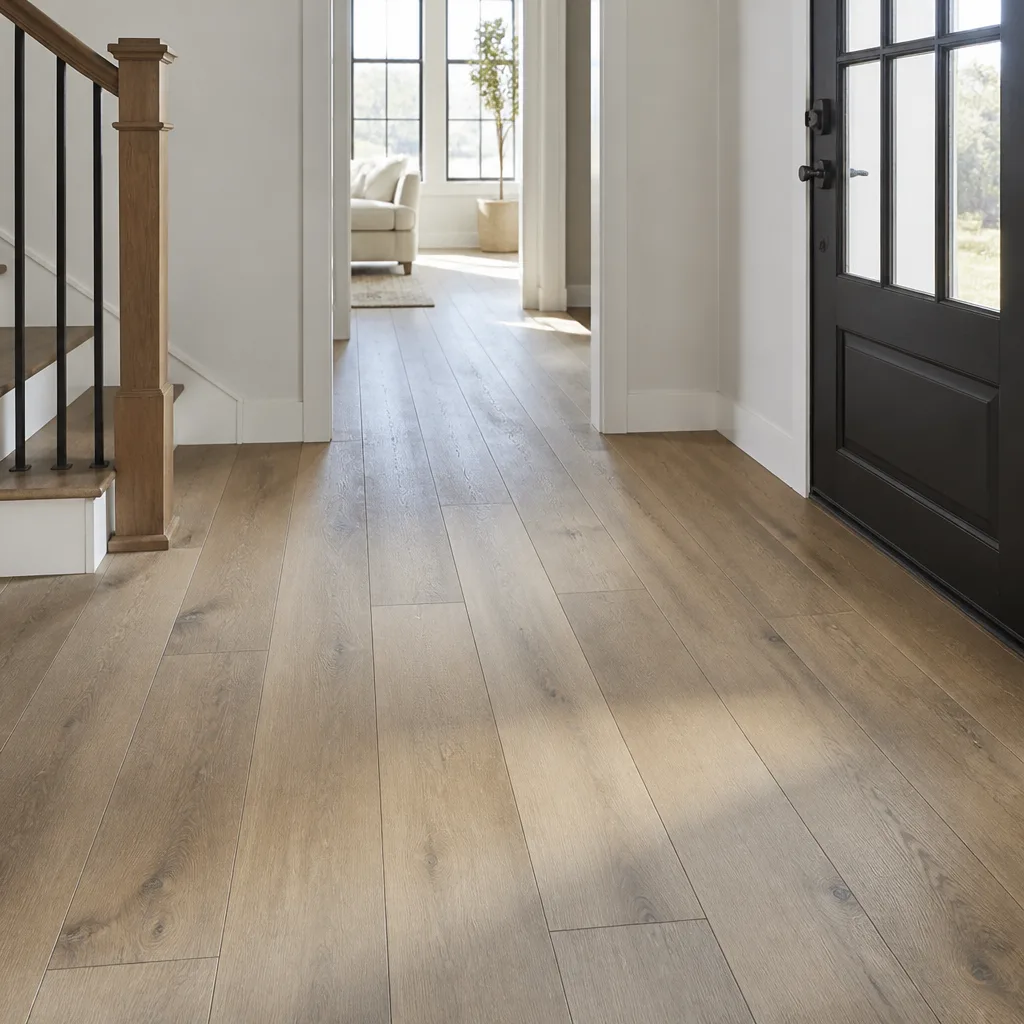 Shaw
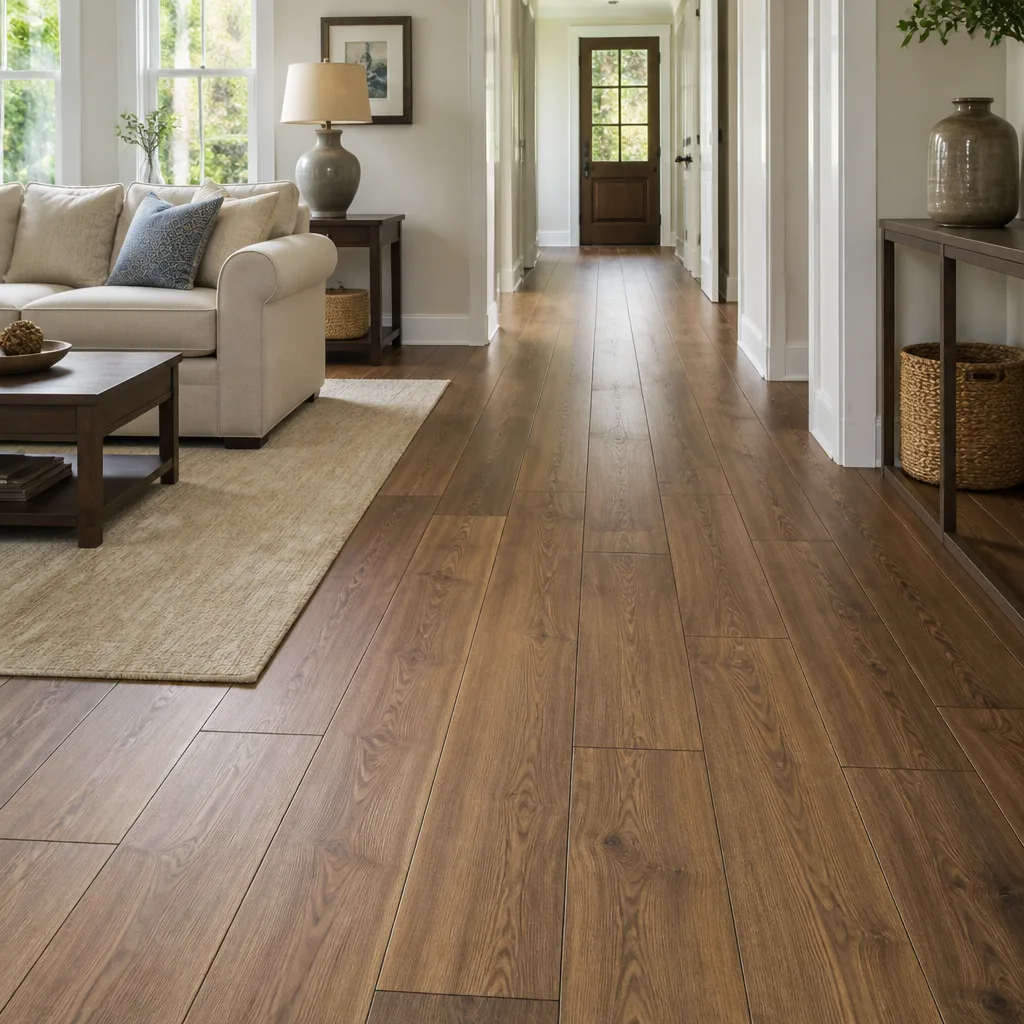 Mohawk
 COREtec
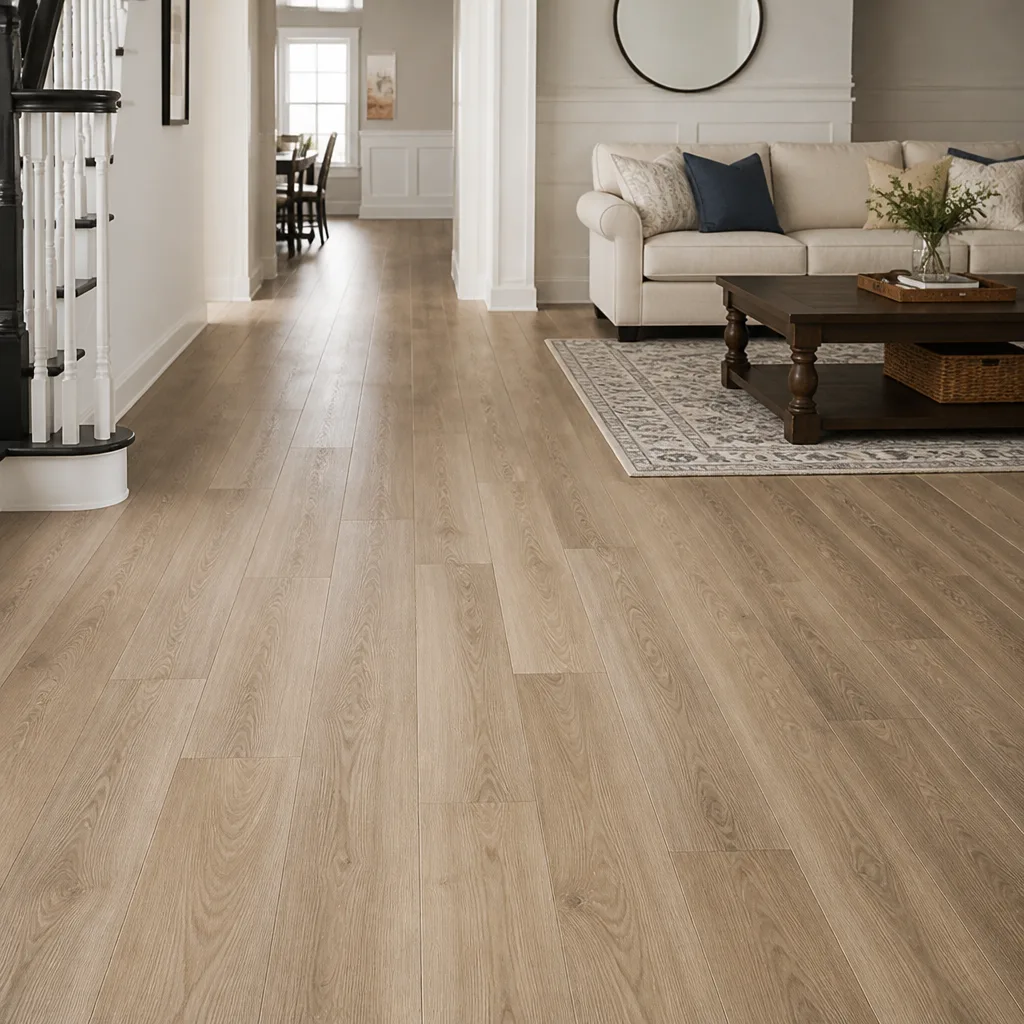 Pergo
Free in-home measure and written estimate: Shaw, Mohawk, COREtec and Pergo lines compared on your own rooms, with carpet, tile, vinyl plank, laminate and hardwood laid out side by side
Get your free estimateHardwood, Vinyl Plank, Laminate or Tile: How Henderson Homeowners Decide
If your Henderson home was built after 1990 and sits on a concrete slab, solid hardwood has already eliminated itself from consideration for most rooms. Not because of price. Because of physics. Wood moves with moisture, and a slab passes moisture vapor up into whatever sits on it, which is a fight solid plank usually loses in a desert valley. That one fact reshapes the whole hardwood-versus-vinyl-versus-laminate-versus-tile question that most comparison pages skip right past. What’s left is usually a two-way race, and the winner hinges on a room-specific variable almost nobody mentions. This guide walks through why each material behaves the way it does on a Henderson slab, how to read a spec sheet, and how to think about ten-year cost, so you can decide with your eyes open.
Quick Answer
For most Henderson homes on a concrete slab, the realistic finalists are luxury vinyl plank and porcelain tile. Solid hardwood is usually ruled out by slab moisture and desert humidity swings, though engineered hardwood can work in some rooms with the right construction and prep. Laminate is often a distant third because its wear ratings measure surface abuse, not the moisture vapor pushing up from below. Choose LVP for warmth, quiet, and fast installation; choose tile for water, resale, and permanence. Call (844) 460-4481 for a free estimate once you’ve narrowed it down.
Styles & brands we work with
- Hardwood
- Engineered hardwood
- Luxury vinyl plank
- Laminate
- Porcelain tile
- Carpet
- Shaw
- Mohawk
- COREtec
- Pergo
Table of Contents
- Why a Henderson Slab Changes the Whole Debate
- Solid vs. Engineered Hardwood on a Henderson Slab
- The Laminate Disqualifier: AC Ratings Don’t Measure Moisture
- LVP vs. Porcelain Tile: The Two Realistic Finalists
- How to Read a Karndean or Shaw LVP Spec Sheet
- Total Cost of Ownership Over 10 Years
- Matching Material to Room in a Henderson Home
- A Step-by-Step Decision Process
Why a Henderson Slab Changes the Whole Debate
Most national flooring comparison articles are written for crawl-space or pier-and-beam houses in humid climates, where the ground under the floor is ventilated and the main worry is air moisture. Henderson is the opposite. The overwhelming majority of homes built here since the early 1990s sit on slab-on-grade concrete, and the soil beneath that slab holds moisture that migrates upward as vapor. The slab itself is not “wet” in the puddle sense, but it emits vapor continuously, and any floor covering has to either tolerate that or be isolated from it.
Layer on the local climate and you get a second force. Henderson swings from hot, dry summer air to cooler winter nights, and indoor relative humidity can move several points across a season. Wood wants to expand and contract with those swings. A material that can’t move, or that traps vapor beneath it, tends to fail in predictable ways: cupping, gapping, edge lift, adhesive release.
This is why we tell Henderson homeowners to think about three things before they think about color:
- Vapor drive from below. Does the product tolerate slab moisture, and does the installation method isolate it?
- Humidity swing indoors. How much will the material move as the seasons change?
- Sun exposure. Henderson’s intense UV fades some finishes and heats some surfaces more than others near west- and south-facing glass.
Get those three right and the material choice becomes much clearer. Get them wrong and even a beautiful floor starts to misbehave within a season or two. If you want to see how this plays out room by room in a Henderson house, our page on Henderson breaks down the local housing stock and typical floor plans.
Solid vs. Engineered Hardwood on a Henderson Slab
Solid hardwood is a single continuous piece of wood, typically 3/4 inch thick. It moves as one thick slab of wood, and on a concrete slab that movement fights the subfloor. That’s why most flooring specialists steer Henderson slab homeowners away from solid hardwood in most rooms. Not because the product is bad, but because the physics stack against it.
What solid hardwood needs to work
Solid hardwood wants a stable, dry, ventilated subfloor. In Henderson, that usually means a plywood subfloor over a crawl space OR a slab with an engineered isolation system and verified moisture control. In a slab-on-grade home without that, solid hardwood is a poor fit for most rooms.
What engineered hardwood can and can’t solve
Engineered hardwood is built from a plywood core with a real wood wear layer on top. The cross-layered core resists movement better than solid, which is why it’s the hardwood option we most often recommend for Henderson slab rooms. But it doesn’t solve everything:
- It can help with: slab vapor drive (with a proper vapor barrier), humidity swing, and thinner floor-height constraints.
- It can’t fix: a slab that’s actively wicking moisture above the product’s tolerance, a floor that gets standing water, or a room with no climate control that runs hot and dry most of the year.
We install engineered hardwood from brands like Shaw and Mannington when the room and slab are right for it. The estimate visit is where that’s determined, not over the phone, because slab condition and room use drive the answer.
The Laminate Disqualifier: AC Ratings Don’t Measure Moisture
Laminate floors are sold on their wear ratings, usually AC3 or AC4. Those numbers describe how well the surface resists scratches and foot traffic. They say nothing about how the floor handles moisture vapor pushing up from the slab below. That’s the blind spot in most laminate comparisons, and it’s the reason laminate often finishes third in Henderson.
What the AC rating actually measures
The AC scale rates resistance to abrasion, impact, and foot traffic on the surface layer. AC3 handles residential traffic comfortably. AC4 handles heavier use. Both are useful numbers. Neither tells you what happens over a concrete slab in a desert valley where vapor drive runs upward all year.
Where laminate still makes sense
Laminate can be a genuinely good choice in a Henderson home when you install a proper vapor barrier, choose a laminate rated for slab installation, and keep the room climate-controlled year-round. Pergo and Armstrong both make laminate lines built with these conditions in mind. We install laminate when the product is right for the room.
The mistake we see most is homeowners choosing laminate purely on AC rating, then being surprised when the floor cups at a slab edge after a humid summer. The rating was never the right benchmark for the local conditions. The product fit is what matters.
LVP vs. Porcelain Tile: The Two Realistic Finalists
Once you factor slab construction and climate, most Henderson rooms come down to luxury vinyl plank or porcelain tile. Both tolerate slab vapor drive far better than solid wood or standard laminate. Both hold up to the local humidity swing. The choice between them comes down to how the room is actually used and what matters more to you.
When LVP is the better call
- You want warmth and quiet underfoot, especially in bedrooms, living rooms, and finished basements on slab.
- You’re covering a large area and want a consistent visual without complex grout patterns.
- The room will get occasional damp traffic (mudroom, laundry, kitchen) but not standing water.
- You want the floor to feel softer for kids or pets moving around the house.
When porcelain tile is the better call
- The room sees real water: entryway with shoe traffic, a bathroom, a laundry with potential spills.
- You want the floor to last through a resale without a second thought, which tile does in most Henderson neighborhoods.
- You want the thermal mass benefit tile provides in summer, when a tile floor stays cooler than vinyl.
- You’re comfortable with regular grout maintenance.
One note on tile grout, because it matters in a dry climate: in Henderson, grout can dry and shrink faster than installers in humid markets expect, which is one reason grout line prep and the right grout matter for longevity. We plan for that. Our tile flooring installation page covers how we handle grout and slab prep for local jobs.
How to Read a Karndean or Shaw LVP Spec Sheet
If you’re comparing LVP brands on spec, two numbers matter most for a Henderson slab application: core density and IIC/STC rating. Most buyers look at wear layer thickness and color first. Those matter for wear and appearance, but they don’t tell you how the plank will behave over a slab in a desert climate. Here’s what to check, in order:
- Core density. A denser rigid core resists indentation from furniture legs and temperature-related expansion better than a lower-density core. Look for the core density spec (often given in specific gravity or kg/m³) and compare planks side by side.
- IIC and STC ratings. These measure impact and airborne sound transmission. For a slab floor, a higher IIC rating means less footstep noise and less sound bouncing off the concrete. Look for values in the upper range of the brands you’re comparing.
- Slab installation instructions. The manufacturer’s installation guide will state whether the plank requires a vapor barrier and what moisture limits apply. Read this before you buy.
- Overall thickness and wear layer. Thicker doesn’t always mean better, but a slightly thicker plank handles subfloor texture better on a slab. Wear layer protects against surface abuse.
- Plank format and locking system. Longer planks and a solid locking system install faster and hold tighter at edges.
Karndean’s rigid-core lines and Shaw’s LVP (including Floorté) both give you the spec transparency you need to compare fairly. If a brand won’t publish core density and acoustic ratings, treat that as a caution, not an opportunity. If you’re also considering carpet in bedrooms, our carpet installation page explains how we handle padding and moisture over slab.
Total Cost of Ownership Over 10 Years
The sticker price of a floor is not the ten-year cost. In Henderson, three things drive the gap between them: UV exposure, grout maintenance reality, and resale norms. Here’s how each category tends to sort out when we talk to homeowners at the estimate.
Ceramic and porcelain tile
Highest upfront cost. Lowest ongoing cost. Grout needs periodic sealing and cleaning, and in a dry climate the grout can dry and shrink, which is one reason doing the grout right the first time matters. Tile holds up to UV, doesn’t fade, and travels well at resale in Henderson. Total ten-year cost is usually predictable.
Luxury vinyl plank
Middle upfront cost, low ongoing cost. LVP resists UV reasonably well but strong direct sun through west-facing glass will fade some lines over a decade, so window coverage matters. No grout to maintain. Replaces easily in a single room if one area wears.
Engineered hardwood
Higher upfront cost. Ongoing cost is low but the floor is sensitive to humidity swing and can’t be refinished as many times as solid. In a Henderson home with good climate control, engineered hardwood lasts well. In a home with wide humidity swings, expect more maintenance attention.
Laminate
Low to middle upfront cost. Ongoing cost depends heavily on moisture control. If the vapor barrier and slab prep are right, laminate performs well. If not, the floor can need replacement sooner than the other categories.
We don’t publish fixed per-square-foot pricing because the range in Henderson depends heavily on slab condition, material choice, room count, and prep. The written estimate sets the final price. What we do recommend is comparing categories on ten-year cost, not sticker price, when you sit down to decide. A higher upfront floor that needs no replacement or special maintenance often wins by year six or seven.
Matching Material to Room in a Henderson Home
Most Henderson homes end up with more than one floor type, which is why single-source accountability matters so much. Here’s a room-by-room starting point we use at the estimate:
Living room and main hallways
LVP or engineered hardwood. These rooms get the most foot traffic and the most sun in a Henderson house. LVP handles both without fuss; engineered hardwood handles it beautifully when the slab and humidity are right.
Kitchen
Porcelain tile or LVP. Both handle occasional spills. Tile handles the wet-spill scenario better and is easier to dry out. LVP gives you warmth underfoot when you’re standing at the counter.
Bathrooms and laundry
Porcelain tile, not because LVP isn’t water-resistant, but because standing water and continuous damp are hard on any plank joint over time. Tile is the calmer choice in a wet room.
Bedrooms
Carpet or LVP. Carpet gives you quiet and warmth; LVP gives you durability and easy cleanup. Either works well over slab with proper prep. Our main flooring installation overview shows how we coordinate carpet and hard-surface work in the same home.
Entry and mudroom
Porcelain tile. This is where Henderson’s dust, grit, and occasional rain meet your floor every day. Tile laughs it off; most other materials show the wear first.
A Step-by-Step Decision Process
Here’s how to work through the choice without spiraling. We walk through this in order at the estimate visit.
- Check your slab condition first. Concrete, wood subfloor, crawl space, or raised foundation? This single fact narrows your material list more than any other.
- Rule out what won’t work on your subfloor. Solid hardwood over slab without proper isolation, standard laminate without vapor control, and any floor in a wet room that can’t take standing moisture.
- Sort rooms by moisture exposure. Wet rooms go tile. Dry rooms stay in the hardwood/engineered/LVP/laminate set.
- Sort rooms by sun exposure. West- and south-facing rooms get materials that resist UV best or window coverage to protect them.
- Compare spec sheets for the finalists. Core density, IIC/STC, wear layer, and slab installation instructions, in that order.
- Add up ten-year cost, not sticker price. Upfront plus maintenance plus likely replacement, per category.
- Book the estimate. Get a written price that includes slab prep, vapor barrier, and installation method, not just the floor material.
Step seven matters more than most homeowners expect. A quote that doesn’t mention slab prep or vapor barrier is not a quote you can compare to one that does.
Common Mistakes to Avoid
- Choosing on color before checking slab condition. A floor can look perfect in the showroom and be wrong for your concrete slab. Check construction before you fall in love with a color.
- Trusting the AC rating as a moisture rating. AC3 and AC4 describe surface wear, not slab vapor behavior. A high-rated laminate still needs vapor control on a Henderson slab.
- Assuming solid hardwood is out of reach because of price. In many Henderson rooms, solid hardwood is out of reach because of physics, not cost. Engineered hardwood is often the better conversation.
- Comparing quotes that measure different scopes. One quote includes slab prep and vapor barrier; another doesn’t. Compare line by line, not bottom line to bottom line.
- Skipping the vapor barrier to save on the estimate. It’s the cheapest insurance on the whole installation. Missing it is the single most common way floors fail here.
- Ignoring how much sun a room gets. In Henderson, west- and south-facing rooms get real UV exposure. Some finishes fade; plan for it.
- Putting plank flooring in a bathroom “because it’s water-resistant.” Water-resistant is not waterproof. Standing water and continuous damp still need to be dealt with, which is why tile is the calmer choice in a wet room.
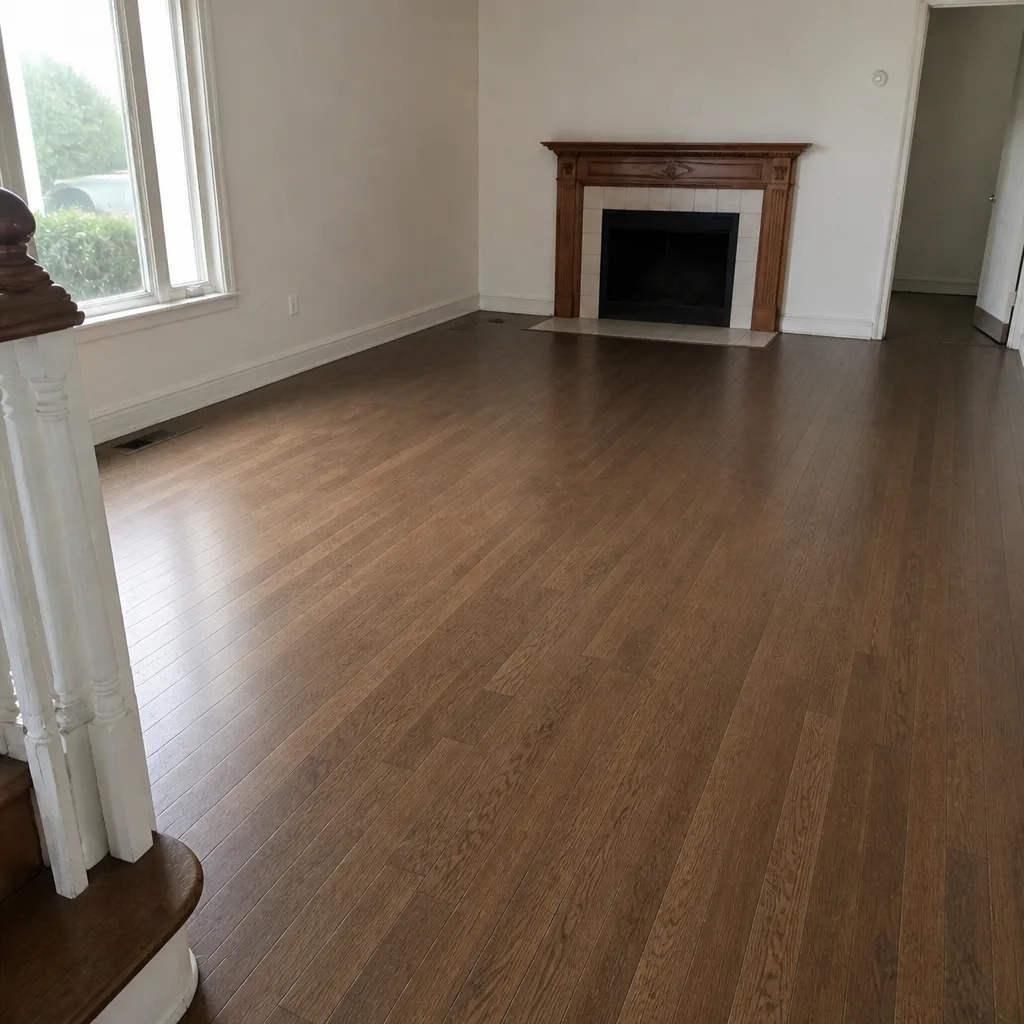
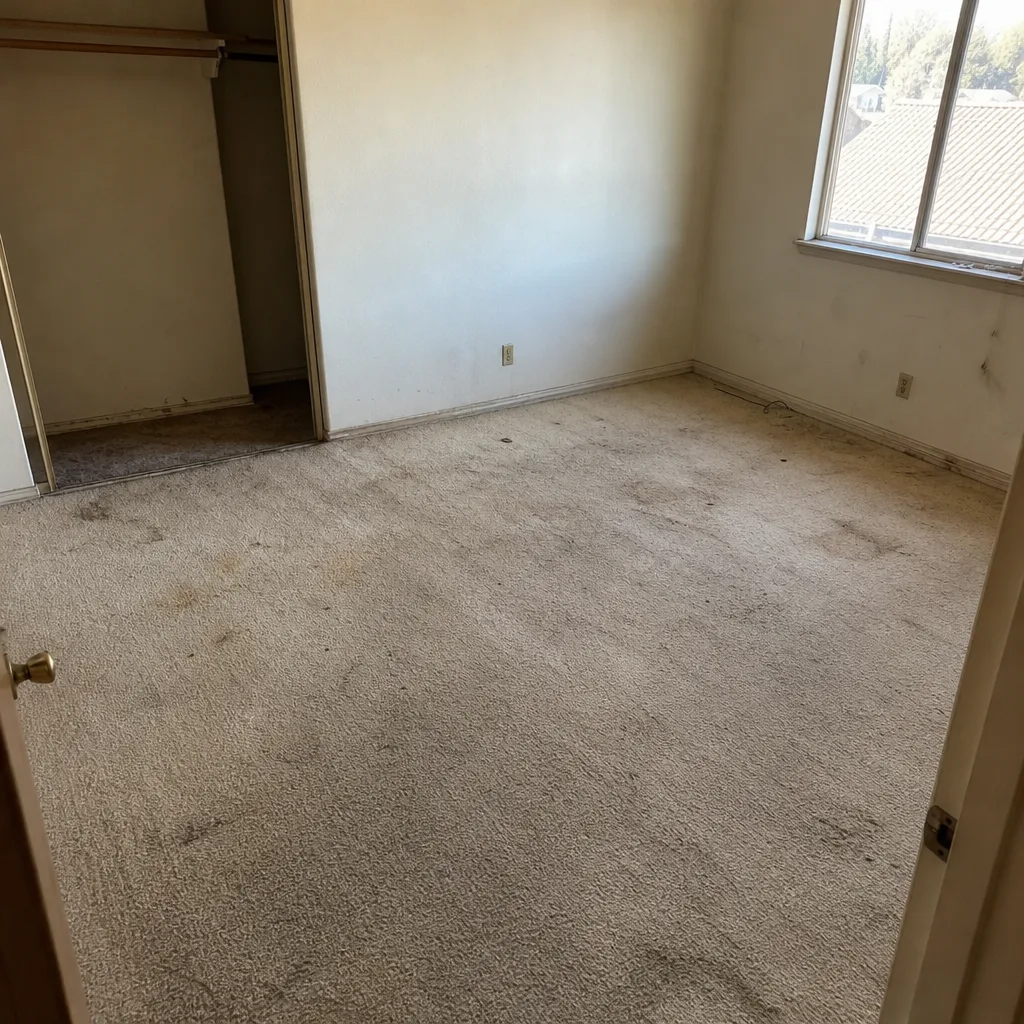
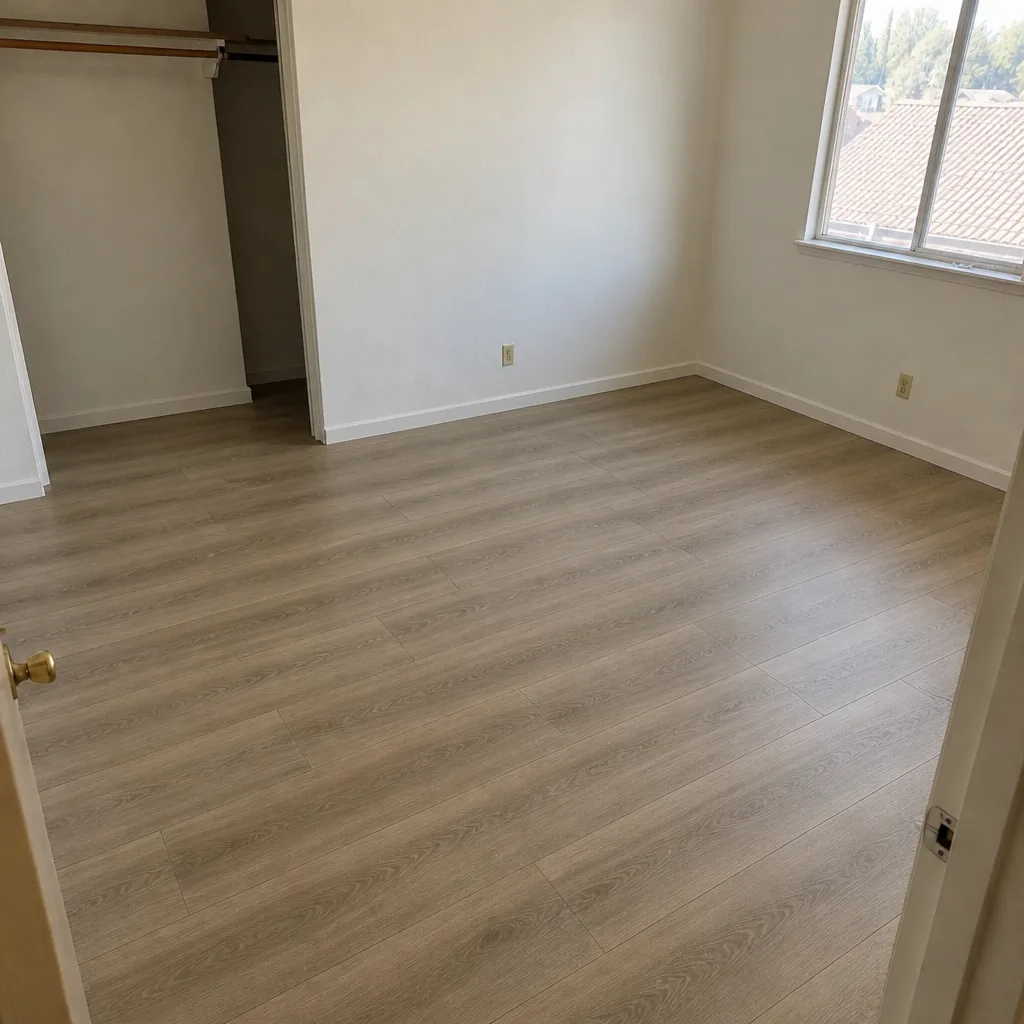
See the difference
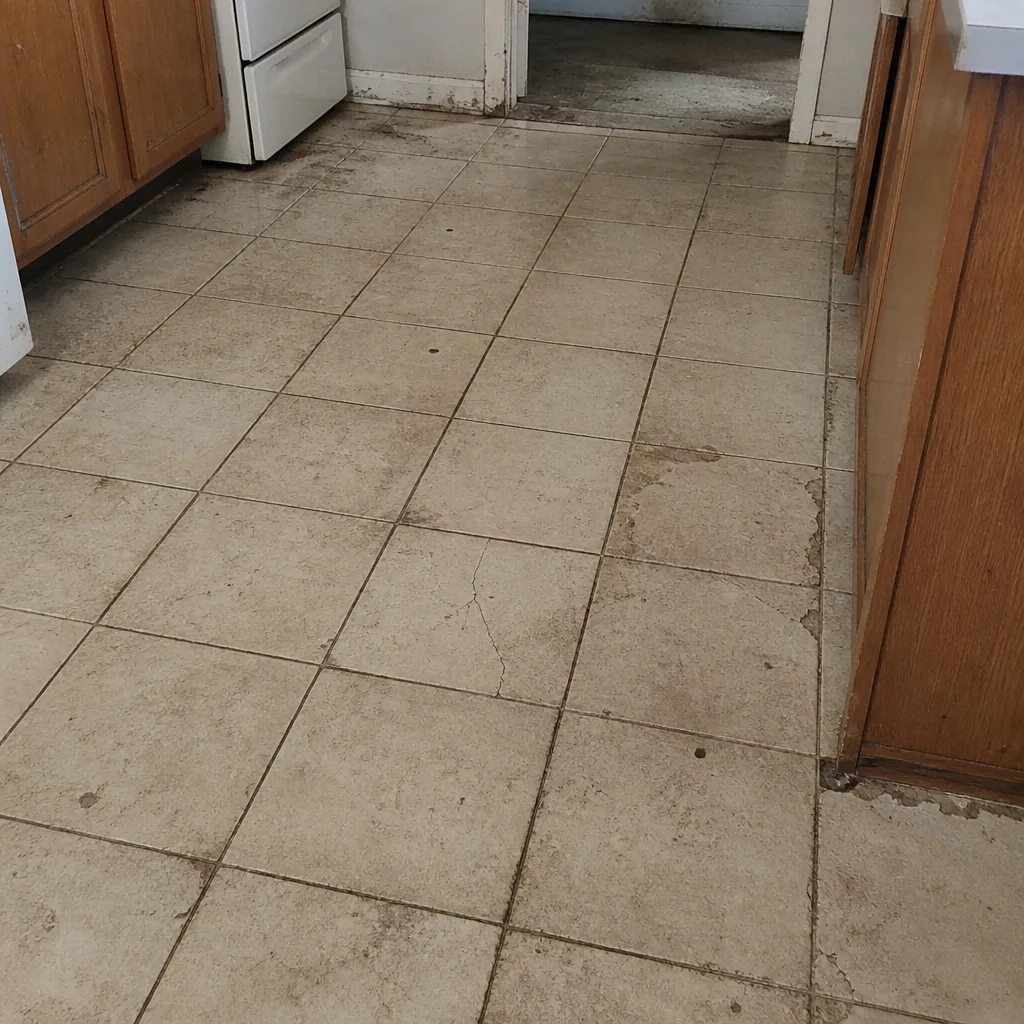 Before
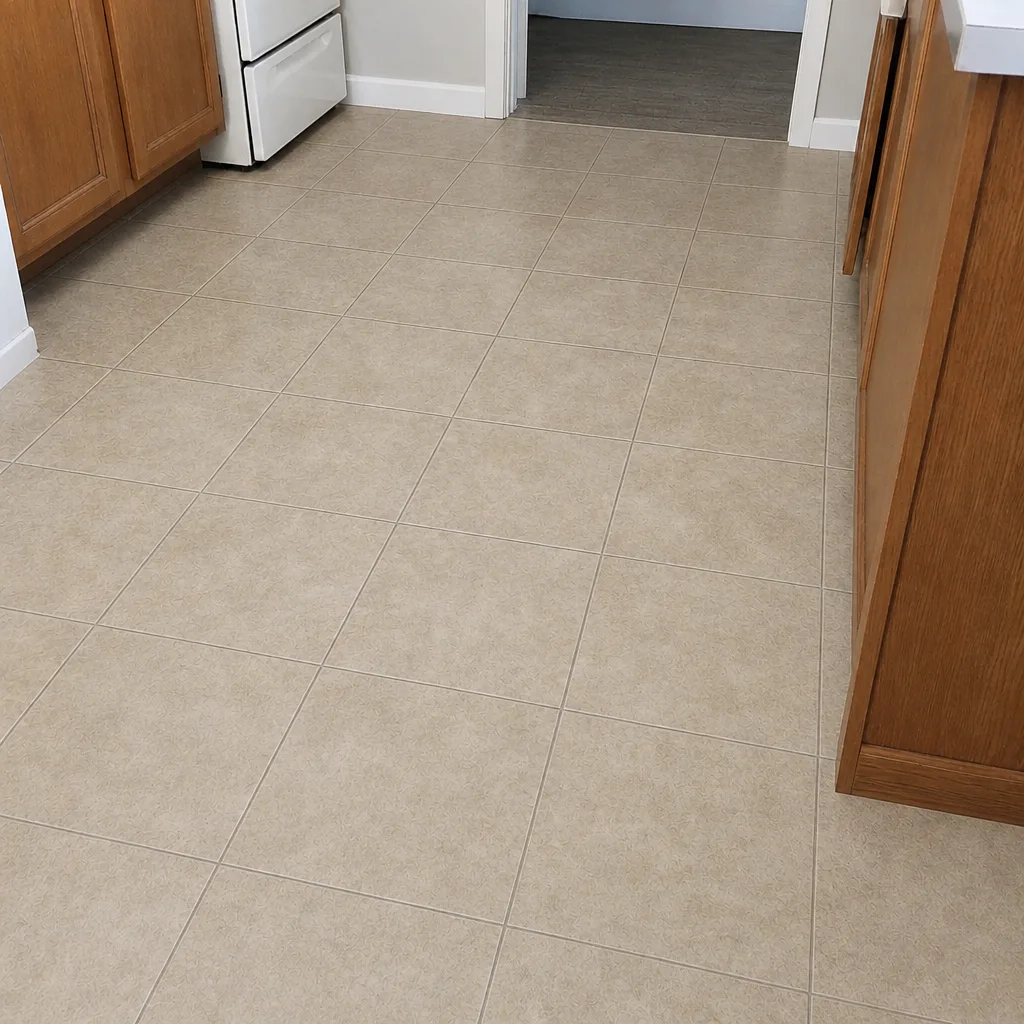 After
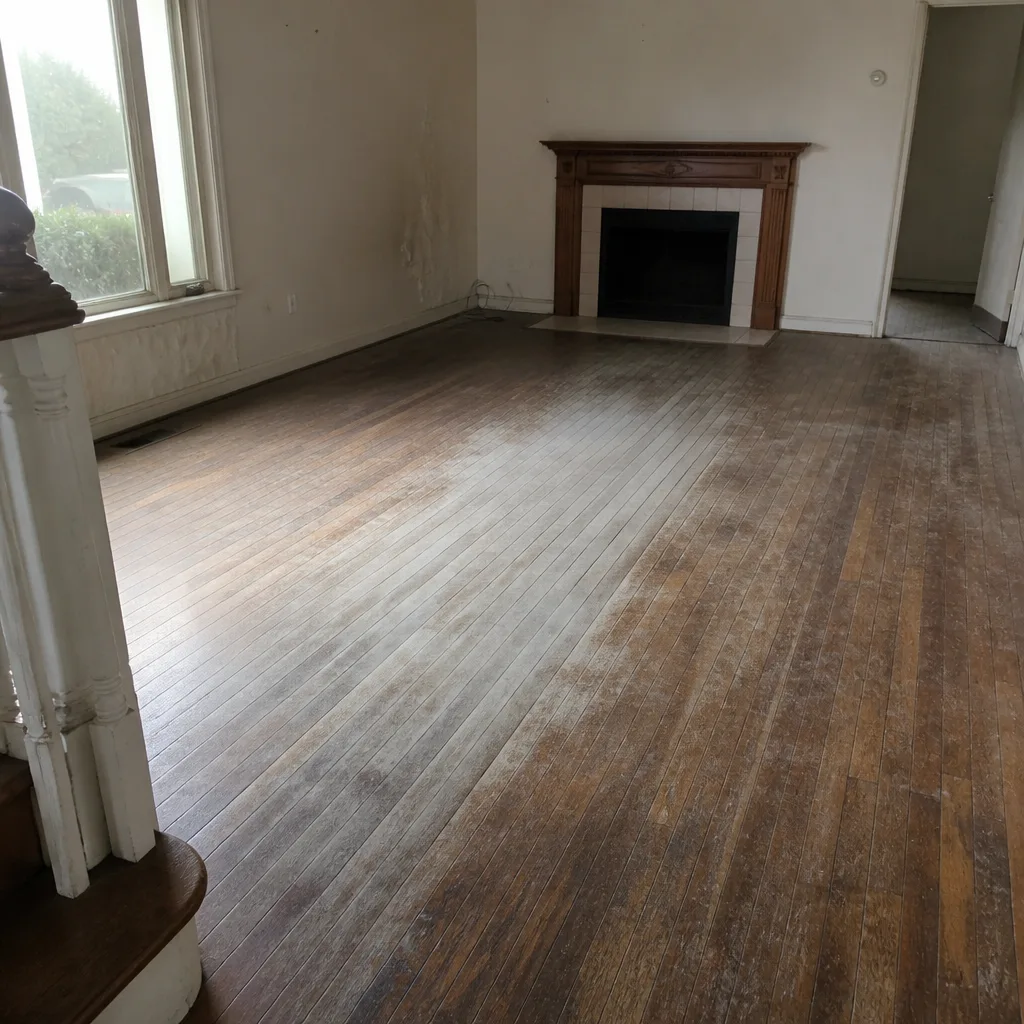 Before
 After
 Before
 After
When to Call a Professional
Some flooring questions you can answer yourself after a little reading. Others need eyes on the actual slab and room. Call a flooring specialist when:
- You don’t know what your subfloor is made of, or how it behaves with moisture.
- The floor you want calls for slab prep you’ve never done before.
- You’re comparing LVP, tile, engineered hardwood, and laminate and want a realistic recommendation rather than a sales pitch.
- You have an existing hardwood floor you’d like refinished instead of replaced, and you’re not sure it can be.
- You’re renovating more than one room and want a consistent plan across the house.
Henderson Flooring Installation offers free estimates in Henderson. Call (844) 460-4481. We answer 24/7. Fast dispatch from 7am to 7pm, Sunday through Friday. Our technicians have up to 9 years of experience, and we install what you’ve already chosen or help you choose from brands we know work.
Frequently Asked Questions
For most rooms, yes. Solid hardwood moves too much against a slab that passes moisture vapor upward, and Henderson’s humidity swings amplify the problem. Engineered hardwood is the hardwood option we usually recommend on a properly prepped slab.
Yes, if the laminate is rated for slab installation and installed over a proper vapor barrier. AC3 and AC4 ratings measure surface wear, not moisture tolerance, so the vapor barrier and slab prep matter more than the rating. Ask for a written estimate that includes both.
Water-resistant is the accurate term for LVP, including COREtec, LifeProof, and Karndean planks. Standing water and moisture from below still have to be dealt with, which is why tile is the better fit for bathrooms and laundry rooms. Call (844) 460-4481 for an exact estimate on a specific room.
Look at three specs side by side: core density, IIC/STC acoustic ratings, and the manufacturer’s slab installation instructions. Denser cores handle indent pressure and temperature swing better; higher IIC ratings reduce footstep noise on slab. Color is the last variable, not the first.
Tile costs more upfront and less over ten years because it doesn’t need replacement and grout maintenance is predictable in a dry climate. LVP costs less upfront and usually needs no replacement either, but direct sun through west windows can fade some lines over a decade. The written estimate sets the final price on either.
You don’t need one, but it usually costs less time and less money than coordinating three contractors in the same home. Henderson Flooring Installation handles all three categories from a single estimate, from flooring brand selection through installation day.
The Bottom Line
In most Henderson homes, the hardwood-versus-vinyl-versus-laminate-versus-tile debate resolves to two real contenders: luxury vinyl plank and porcelain tile. Solid hardwood is usually ruled out by slab physics, not by price. Laminate finishes third more often than it should because homeowners are shopping by AC rating instead of moisture behavior. LVP and tile both handle slab vapor drive well; the choice between them comes down to how the room is used, how much sun it gets, and how much grout maintenance you’re willing to take on. Read the spec sheet for core density and IIC/STC, compare ten-year cost, and book the estimate before you commit. Written by the team at Henderson Flooring Installation.