
Last updated November 17, 2026
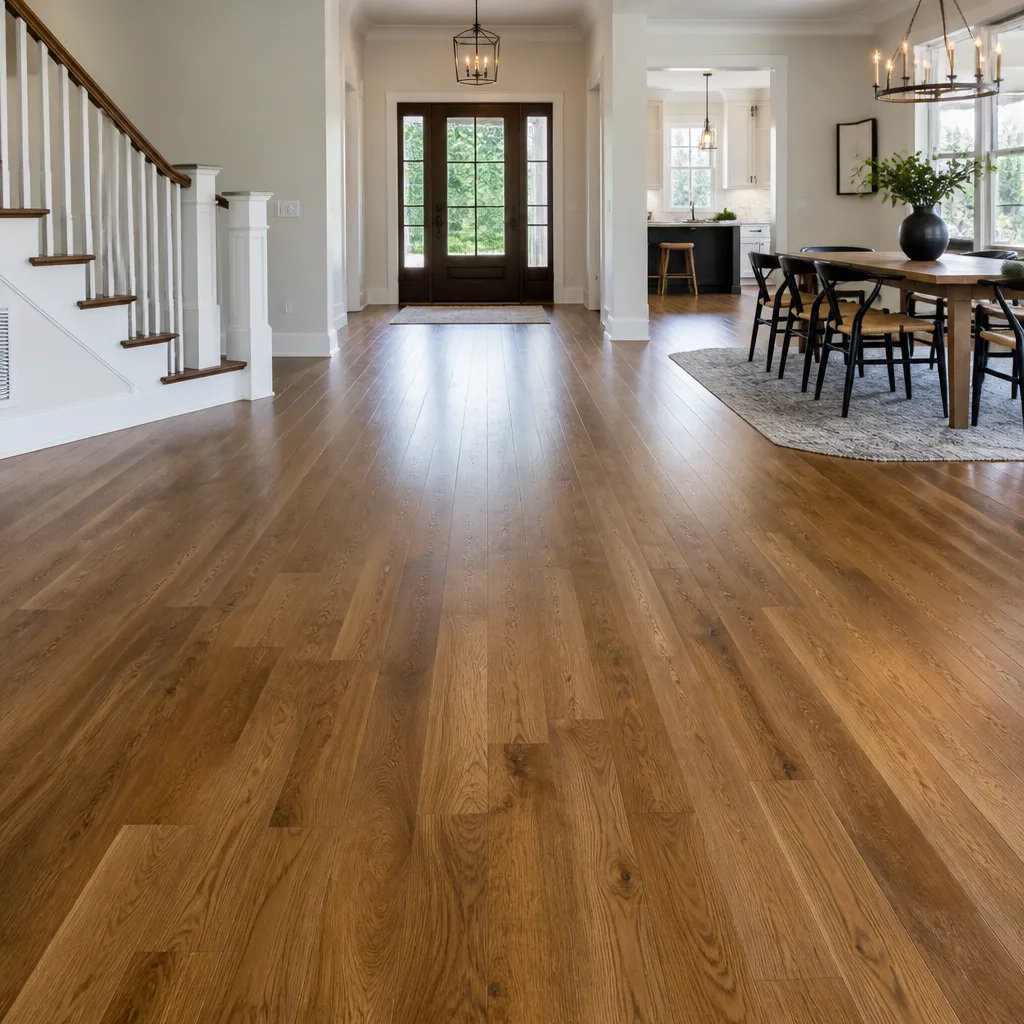 Hardwood
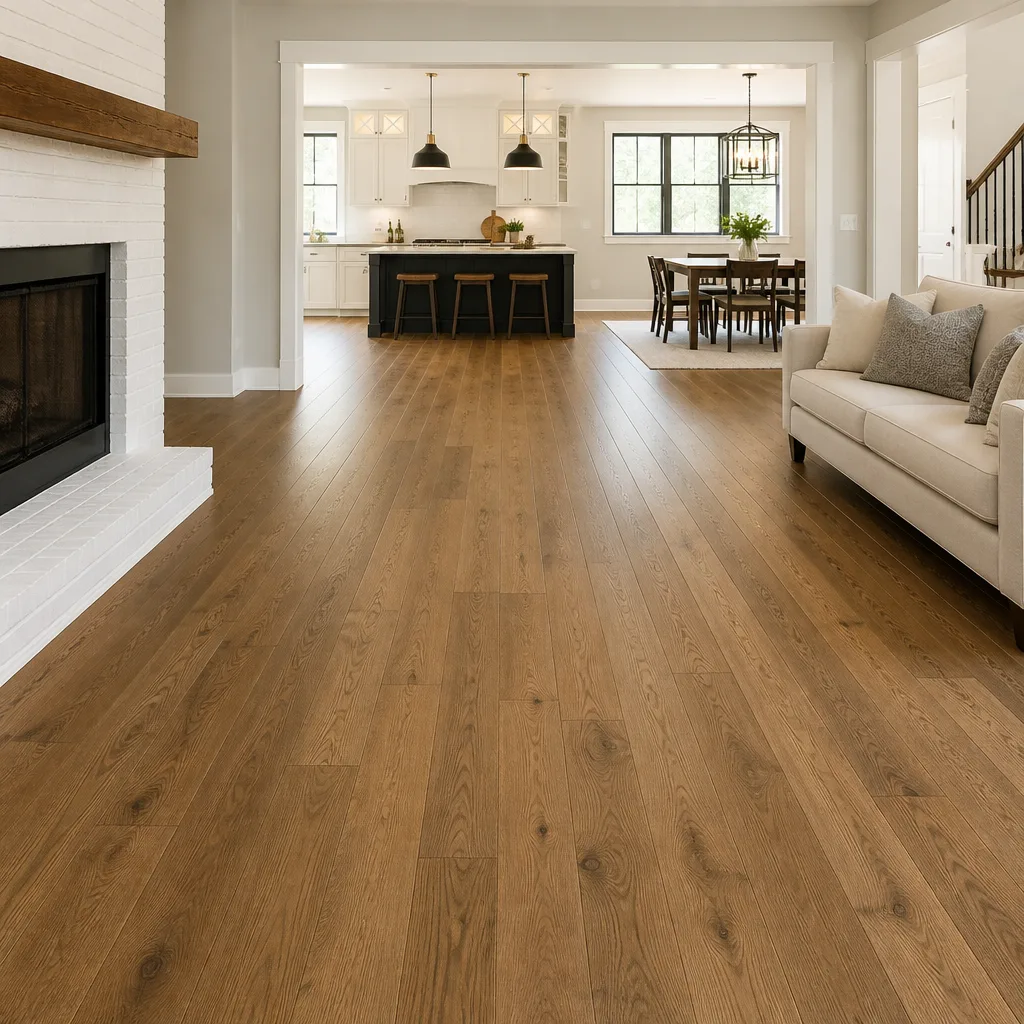 Engineered hardwood
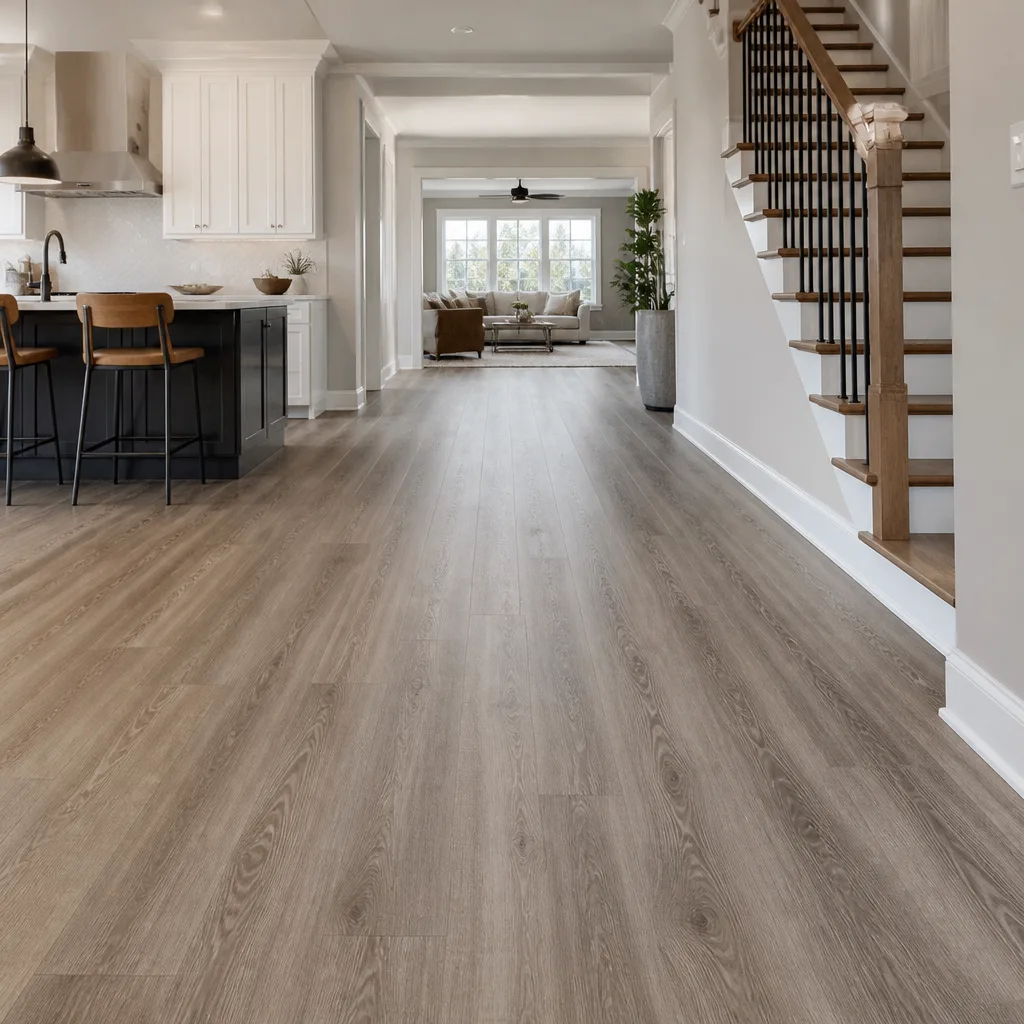 Luxury vinyl plank
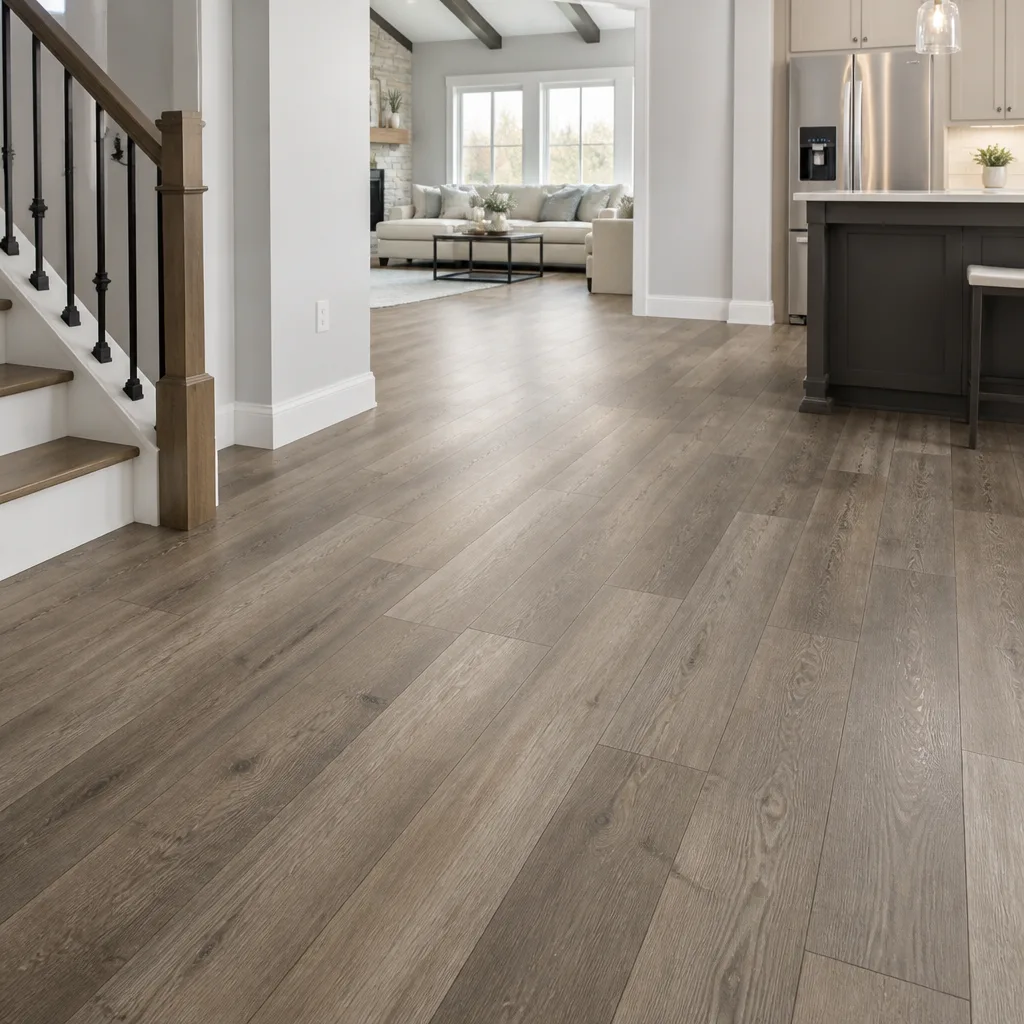 Laminate
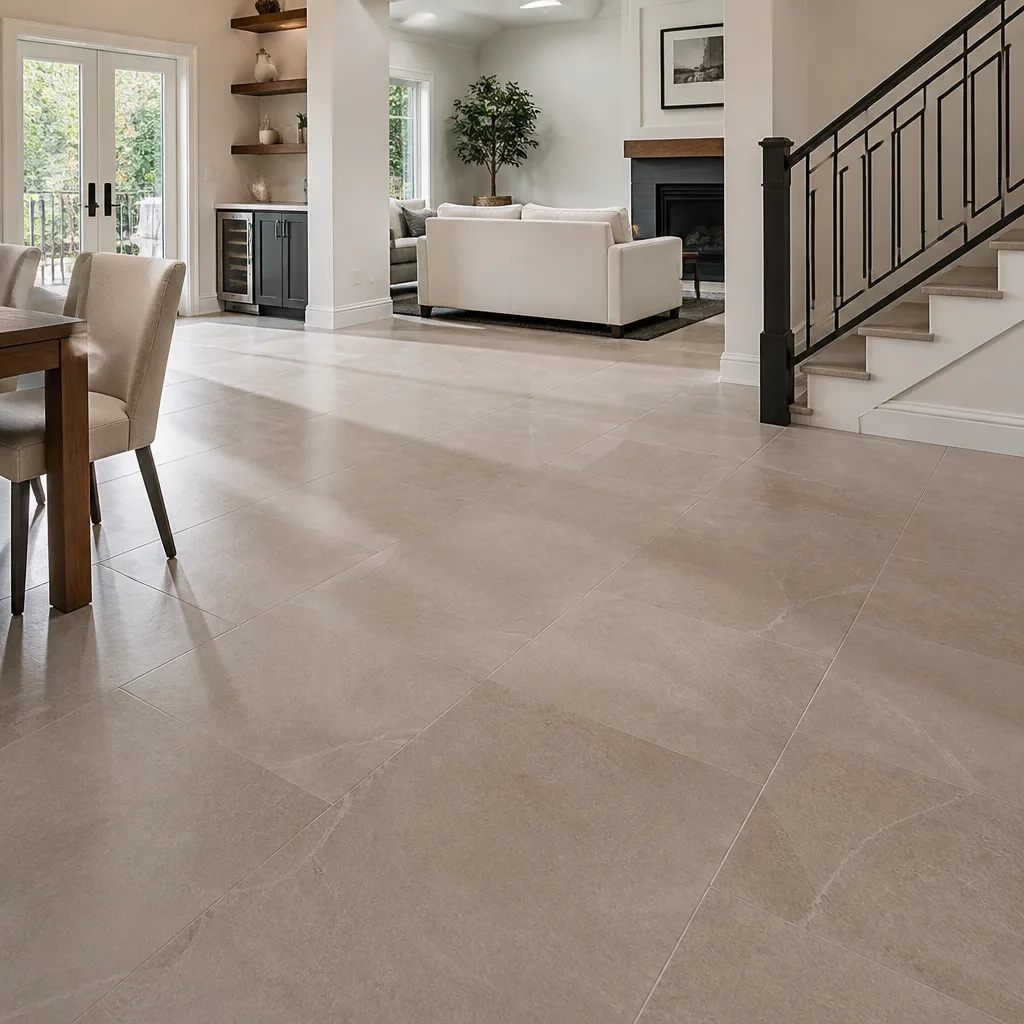 Porcelain tile
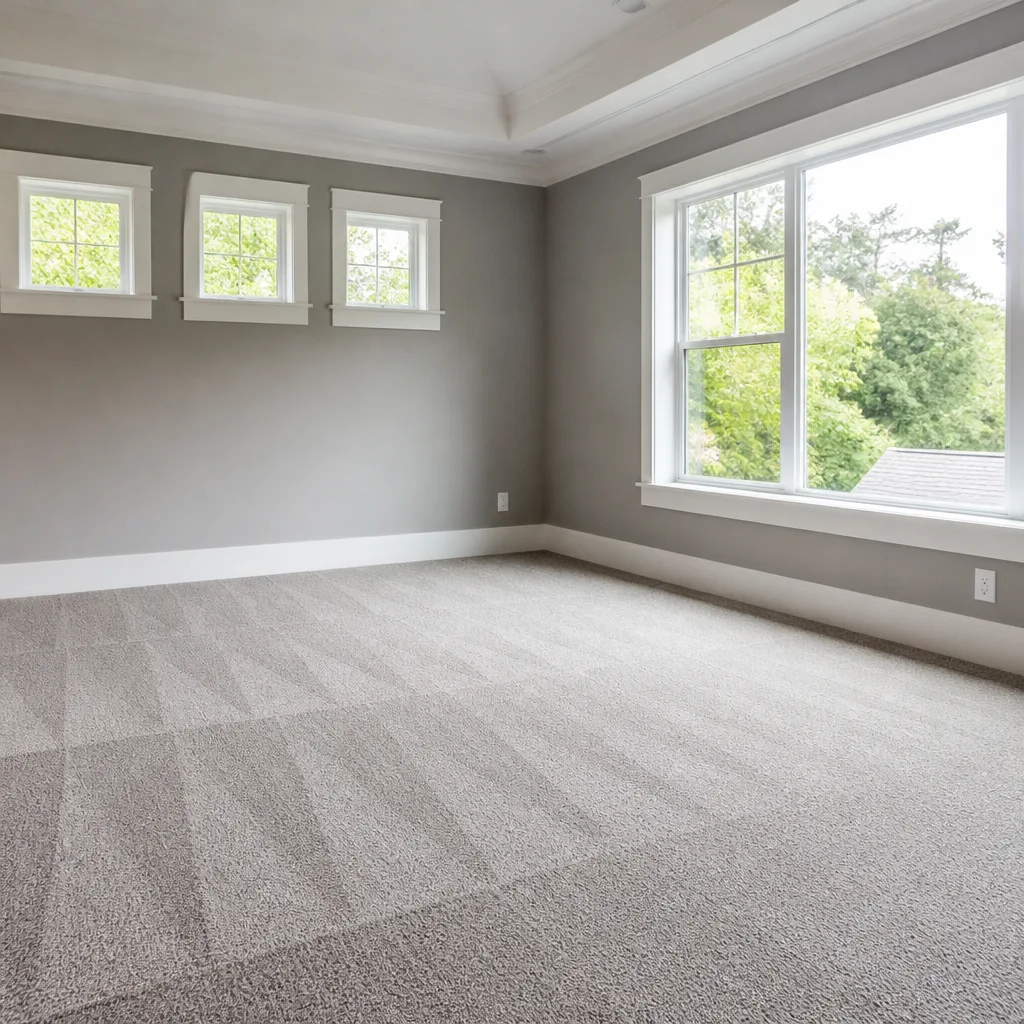 Carpet
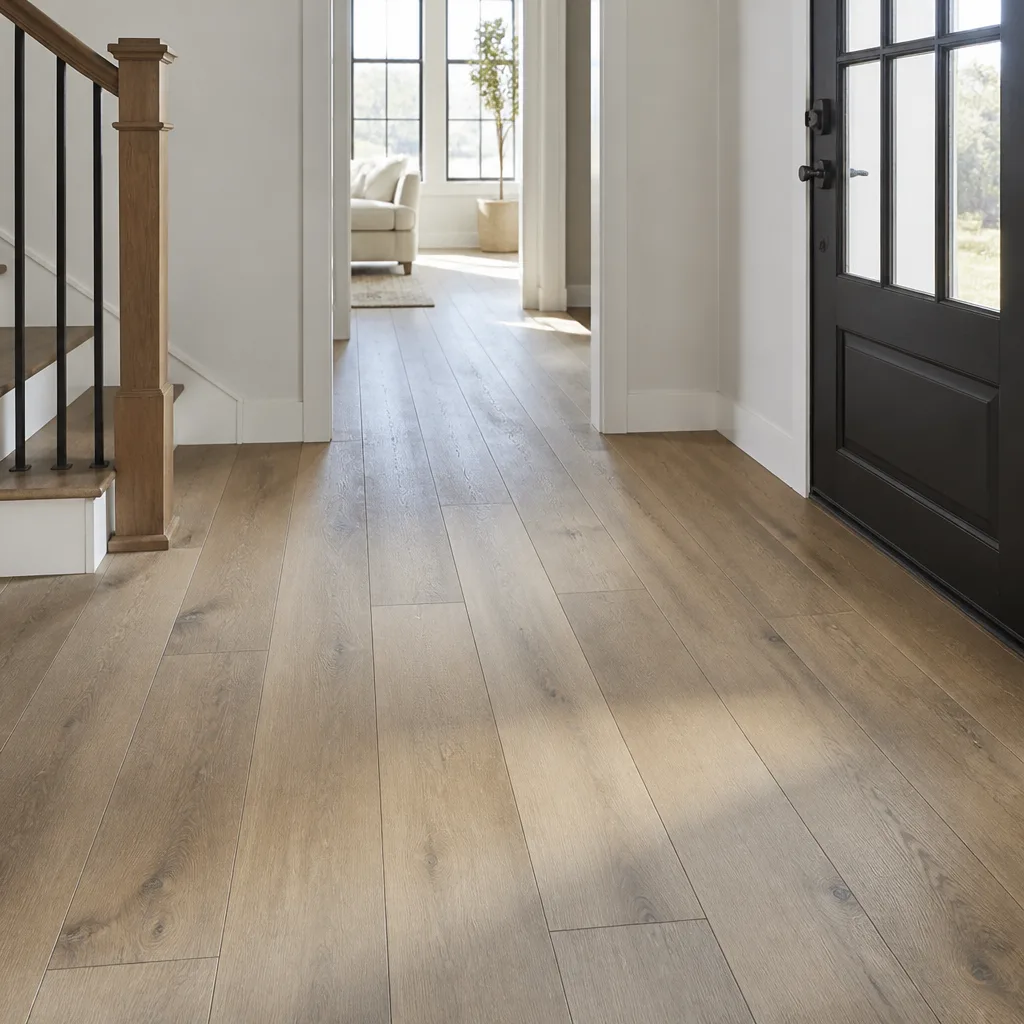 Shaw
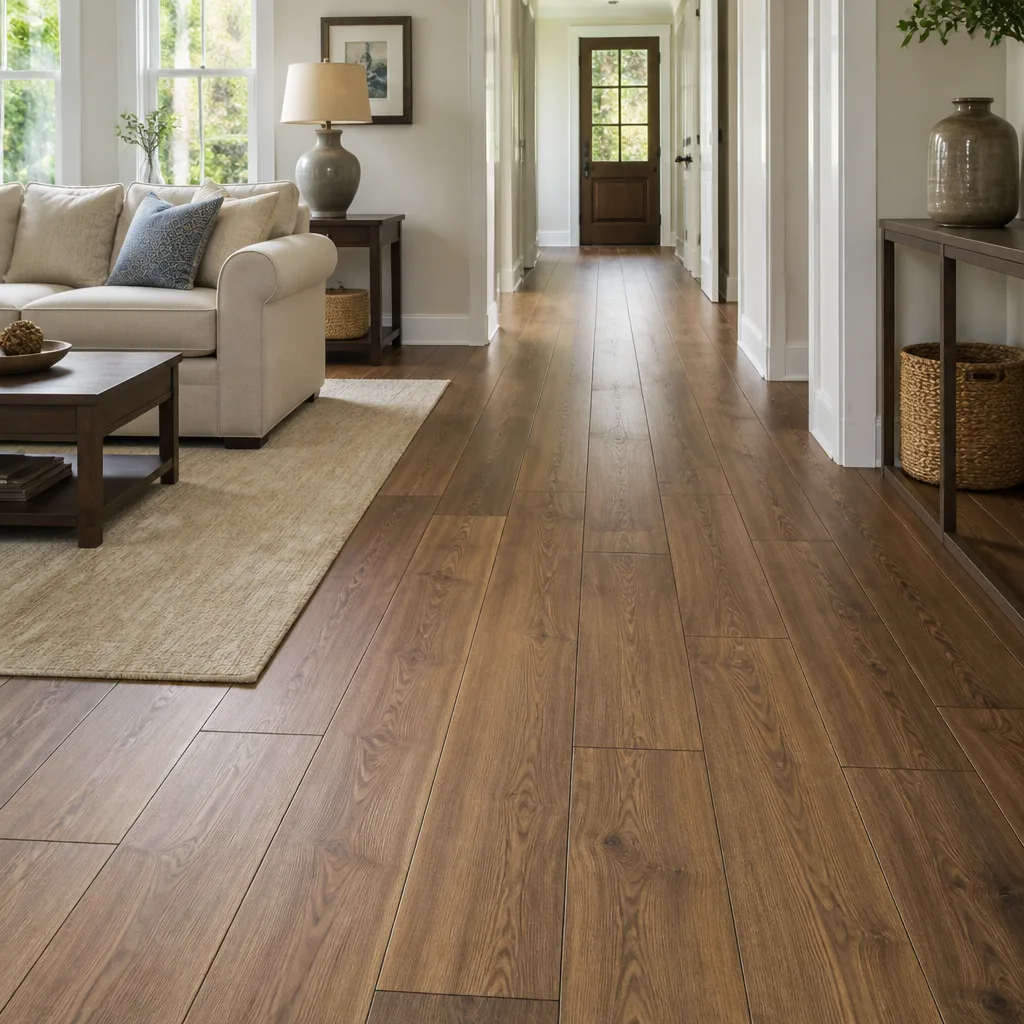 Mohawk
 COREtec
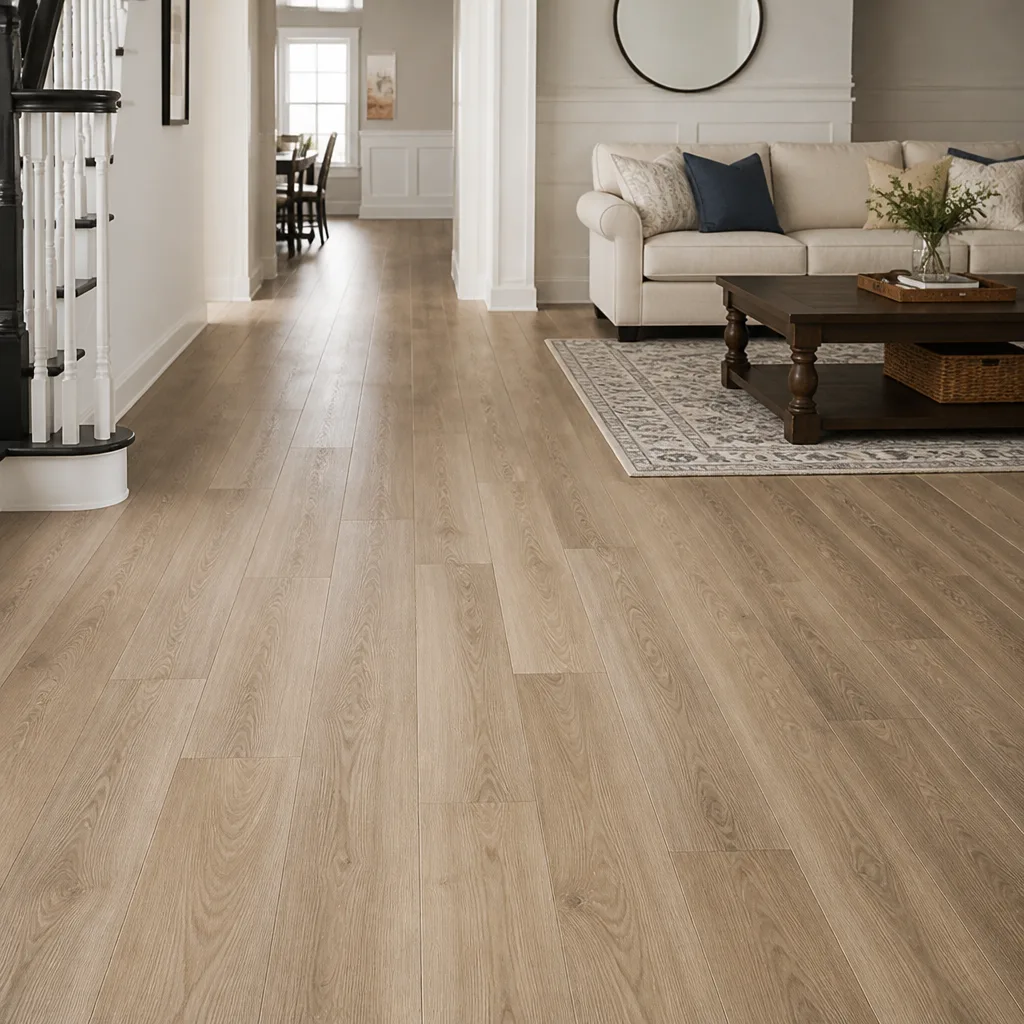 Pergo
Free in-home measure and written estimate: Shaw, Mohawk, COREtec and Pergo lines compared on your own rooms, with carpet, tile, vinyl plank, laminate and hardwood laid out side by side
Get your free estimateHow to Care for New Flooring: Hardwood, Vinyl, Laminate, Tile and Carpet
The care sheet in the box was written for an average American house. Your house in Henderson probably isn’t that house. We’ve seen what happens to a new floor through its first full summer and its first full winter: the same room, the same material, two completely different environments. Between a July afternoon with the AC running hard and a January morning with the heat on, indoor relative humidity in a Henderson home can swing widely, and that swing is what wears floors faster than traffic does. Coastal or humid-climate care advice won’t help you here. What follows is care guidance built for desert living and organized by material: hardwood, luxury vinyl, laminate, tile, and carpet.
Styles & brands we work with
- Hardwood
- Engineered hardwood
- Luxury vinyl plank
- Laminate
- Porcelain tile
- Carpet
- Shaw
- Mohawk
- COREtec
- Pergo
Quick Answer
Care for new flooring in Henderson by matching the routine to the material: sweep or vacuum grit daily, damp-mop water-resistant floors with a pH-neutral cleaner, keep wood and laminate dry, and manage indoor humidity year-round through your HVAC. Protect floors from Henderson’s intense UV through west- and south-facing windows, use entry mats for alkaline desert dust, and keep every product’s care paperwork so a real defect can be told apart from normal wear.
Table of Contents
- Why Henderson’s Climate Changes How You Care for a Floor
- Dust Management: Why Desert Dust Is More Abrasive Than Indoor Dirt
- Caring for Hardwood, Solid and Engineered
- Caring for Luxury Vinyl Plank and Laminate
- Caring for Porcelain and Ceramic Tile and Grout
- Caring for Carpet
- Humidity Management Through the Seasonal HVAC Shift
- UV and Heat Protection on West- and South-Facing Floors
- When Something Goes Wrong: Warranty, Callback, or Normal Wear
- Common Mistakes to Avoid
- When to Call a Professional
- Frequently Asked Questions
- The Bottom Line
Why Henderson’s Climate Changes How You Care for a Floor
If you’ve ever launched a floor-care routine built for a Midwest or coastal house, the appeal of doing the same in Henderson is understandable. The trouble is that a manufacturer’s care instructions are typically calibrated to average indoor conditions: moderate temperatures, a household that needs neither heavy heat nor constant air conditioning, and humidity that tends to sit in a comfortable middle band. A Henderson home lives at the edges. Summer indoors means a cooling system running through the hottest daylight hours, sun angles that throw direct light deep into rooms through west- and south-facing windows, and particle loading from desert landscaping. Winter indoors means heating that dries the air further. The result is a living space that shifts between much drier and somewhat more humid depending on the season and how the thermostat runs, and every flooring material responds to that shift differently.
That’s why flooring care here has a desert-specific layer. It’s not just about how often you mop. It’s about what’s in the dust you’re mopping up, how much direct sun a given room takes, and whether the wood floor in your hallway is being asked to hold a stable moisture content through a swing that plain thermostat settings don’t control. The rest of this guide builds the routine material by material, with those conditions in mind. If you’re still deciding what to install, this is also why we talk with Henderson homeowners about the room’s exposure to light and its moisture patterns, not just the color they like: the right floor installed the right way includes thinking about how it will live.
One practical note before the details: the owner of care is you. Your installation day ends with a floor; what happens over the next decade is about the routine. We work with products from a defined roster of brands, and each one arrives with its own care and warranty paperwork. Keep it. Everything below makes more sense in the context of that paperwork, and we’ll come back to why in the section on warranty claims.
Dust Management: Why Desert Dust Is More Abrasive Than Indoor Dirt
Not all dust scratches equally. The particulate tracked into a Henderson home from desert landscaping isn’t the soft household fluff that settles on a bookshelf. It’s mineral-heavy, and because the local environment has a naturally alkaline quality, that grit is abrasive enough to dull a finish and haze a gloss where it gets walked. Anyone who has watched the finish go on a hallway hardwood or a Karndean plank in a busy entry will recognize the pattern: the wear path follows the foot traffic, and it shows up first where the floor is also being ground by particulate. The care strategy for this is mostly about what happens at the door, not what happens with the mop.
Here’s the entry layer that actually reduces finish wear:
- Two-step matting at each exterior door. A coarse, textured outdoor mat scrapes grit off shoes, then a softer indoor mat absorbs any remaining particulate. One mat doesn’t do both jobs well.
- Size the indoor mat to the step. Two comfortable steps onto the indoor mat before a foot meets the flooring is the home goal, since that’s roughly how many strides it takes to shed most grit.
- Vacuum mats, don’t just shake them. A mat that stays loaded with sand stops scraping and starts releasing grit back onto the floor.
- Sweep or dust-mop high-traffic paths daily. Once particulate is on the floor, a damp mop can carry it around instead of removing it. Dry removal first, always.
- Keep landscaping debris from the walkway. A gravel-scattered approach path is a grit delivery system. Keeping walkways clear cuts down what enters at all.
Beyond the door, the frequency question matters more in Henderson than in a greener climate. Regular dry removal of grit is the single most effective habit for preserving a floor’s finish, including the finish on tile floors, where fine scratches can dull a polished surface over time. On vinyl and laminate, that same daily dry pass keeps the wear layer clear of abrasive particles, which matters because once the wear layer is marred, the damage is permanent and not something any cleaner fixes.
Caring for Hardwood, Solid and Engineered
A hardwood floor in Henderson needs a different routine from a hardwood floor in a wetter climate, not because the wood is different but because the air around it is. Solid hardwood responds to swings in indoor humidity by expanding and shrinking, and engineered hardwood does the same to a lesser degree because its construction is more dimensionally stable. The most damaging recurring situation in a desert home is not water on the floor. It’s dry indoor air during heating season pulling moisture out of the boards and opening gaps and, at the extreme, cracking a finish along the board edges. In a well-managed home the swing stays modest. In a home where the HVAC runs without any humidity consideration, the wood is being asked to absorb all of it.
What a sound hardwood care routine looks like:
- Sweep or vacuum with a hard-floor attachment weekly, more often on high-traffic paths. Dry grit is what grinds a finish; remove it before it becomes a problem.
- Damp-mop only, never wet-mop. A lightly dampened mop with a cleaner made for wood floors, kept to a minimum, is the standard. Standing water is the enemy of any hardwood floor.
- Use a pH-neutral cleaner made for wood. Multi-surface or high-alkaline cleaners can dull a film finish and leave streaks. Read the label.
- Wipe spills immediately. A spill that sits, even a small one near a seam, can raise a board edge.
- Watch the dry season, not just the wet. In Henderson, the more aggressive challenge is often dryness. Tracking indoor humidity and managing it through HVAC is part of the floor’s care, not a separate topic.
- Follow the product’s care sheet. A Mannington engineered floor and a solid oak floor have different tolerances, and the care document tells you which applies to yours.
Refinishing is a separate conversation. Not every hardwood floor can be refinished, and that decision depends on the thickness of the wood wear layer and the floor’s condition, which are checked at the estimate visit, not assumed. When a floor can be refinished, the goal is to bring it back to its original finish, sometimes with a different stain, and the outcome depends on the species and what’s underneath. In a Henderson home with plenty of sun exposure, the finish that goes on matters for UV stability too. We can help with that assessment when the time comes.
Caring for Luxury Vinyl Plank and Laminate
Water-resistant floors are not waterproof floors, and this is the most common misunderstanding we see with both luxury vinyl plank and laminate. LVT and rigid-core products like those from COREtec, LifeProof, and Karndean are built to tolerate damp mopping and the occasional standing spill cleaned up promptly. Laminate is more sensitive to moisture on its surface edges and at seams. Neither material will shrug off a puddle that sits for hours against a baseboard, and no floor of any material is designed for continuous moisture from below. That distinction guides the whole care routine.
Luxury vinyl and rigid-core care
- Daily dry removal. Sweep or dust-mop to lift grit before it grinds. On a vinyl plank in an entry, this is the single best habit.
- Damp mop with a pH-neutral cleaner. A well-wrung microfiber mop is enough. Never flood the floor.
- Skip abrasive pads and scouring powder. They can dull or scratch the wear layer, and that damage is permanent.
- Clean spills quickly, especially at seams. Rigid-core product is built to resist water at the surface, but standing water pushed into a seam is still something to clean up now, not later.
- Use only cleaners the product instructions allow. Some active ingredients in multi-surface sprays aren’t recommended for certain vinyl wear layers.
Laminate care
Laminate’s core is susceptible to moisture, so the routine is stricter. Damp-mop, never wet-mop, and wipe up any standing liquid on edges and seams immediately. Avoid leaving wet entry mats sitting on the surface, and don’t use a steam mop, which can force moisture past the seams. For a laminate in a Henderson home where dust is heavy, dry removal comes first and a light damp pass handles the residue. Karndean and similar premium luxury vinyl lines have their own care sheets; laminate from a brand like Mannington has a different one. Both are worth reading once and taping inside a cabinet for reference.
Caring for Porcelain and Ceramic Tile and Grout
Tile is the most forgiving floor in this guide, and that’s exactly why people overdo it on care. A Daltile porcelain floor in a Henderson kitchen or entry can handle a thorough routine, but aggressive scrubbing and harsh products are what wear grout sealer and dull the tile’s finish prematurely. The core of tile care is simple: remove grit, mop with a neutral cleaner, and protect the grout. The third step is the one most people skip, and in a home where desert dust is abrasive and mineral-heavy, the grout is the first thing to show it.
What a sound tile routine involves:
- Sweep or dust-mop the tile before it’s mopped. Grit under a mop is how fine scratches begin.
- Damp-mop with a pH-neutral tile cleaner. Skip anything labeled as a heavy-duty degreaser for regular use; save it for specific stains.
- Clean grout lines with a soft-bristle brush, not a hard one. A stiff brush scours the grout surface and opens it up faster.
- Re-seal grout on the interval the product’s instructions recommend. The sealer is what resists staining; once it wears through in high-traffic lines, the grout is exposed.
- Wipe up anything acidic quickly. Vinegar, citrus, and some cleaners can etch and dull certain grout and natural stone. Use the manufacturer’s cleaner for your specific tile.
- For polished porcelain, treat scratches like surface damage. Fine grit marks are cumulative, and they’re why daily dry removal matters most in tile entries.
Tile’s other care issue is at the perimeter. Tile floors move with the seasons too, and expansion gaps and caulk joints at walls and edges are part of the system that lets it do that without tenting or cracking. If you notice a caulk line pulling away, that’s a call worth making rather than a tube of caulk worth guessing about, since the right repair depends on the joint. A tile floor set correctly in Henderson should last a very long time with this kind of routine. When scheduling a tile flooring installation or a repair, this is also the point at which installation details live or die: the subfloor prep and the way the joints are planned determine how the floor tolerates everything described here.
Caring for Carpet
Carpet’s care needs are the mirror image of hard surfaces in a Henderson home. It doesn’t care much about relative humidity swings the way wood does, but it is the floor that collects more dust and grit than any other, and its fibers are where alkaline particulate, traffic, and UV damage can add up. The routine that keeps carpet healthy is front-loaded: vacuum often, manage what comes in at the door, and spot-clean before stains set. Professional cleaning happens on a schedule set by the fiber and the household, not by guesswork.
A practical carpet care routine:
- Vacuum high-traffic areas weekly and lighter-traffic areas regularly. Slow passes over each section lift more embedded soil than quick ones.
- Invest in the two-step entry matting described earlier. A large share of what ends up in carpet arrives on shoes; mats cut that immediately.
- Blot spills, never rub. Work from the outside edge of a stain inward. Rubbing pushes it deeper into the pile.
- Use the spot cleaner the carpet maker recommends. A carpet’s cleaning instructions matter: a cleaner that’s fine on one fiber can damage another.
- Have it professionally cleaned on the interval the product instructions recommend. Routine professional cleaning is also often part of what keeps a carpet’s warranty terms intact, so check the paperwork.
- Rotate the furniture footprint once in a while. Carpet recovers unevenly under heavy furniture, and moving things spreads the load.
In Henderson, carpet in a sunlit west-facing room takes UV exposure through the afternoon, and some fibers fade with cumulative sunlight. Window coverings during peak sun make a real difference, and if the room already has furniture in place, rotating and occasionally repositioning it is the difference between a floor that ages evenly and one with a bright square where the rug used to be. When installing a carpet in a room that takes heavy sun, an experienced installer will talk with you about the fiber choice itself, not just the color. If you’re considering an update, the carpet installation page covers what to expect.
Humidity Management Through the Seasonal HVAC Shift
Your thermostat talks about temperature, not moisture, and that’s the gap this section fills. Indoor relative humidity affects flooring the way it affects furniture, wood trim, and doors that stick or don’t: solid and engineered hardwood need a tighter moisture band than the rest of your home’s surfaces, and in Henderson, the worst of the swing comes straight from the HVAC seasonal shift. Summer brings cooling that manages heat but can leave interior air variable. Winter brings heating that dries the air inside a home more than most people realize. If those seasons aren’t managed together, a wood floor experiences a slow expansion and contraction cycle, and the signs are gaps in winter and squeaks in summer. The problem isn’t the floor: it’s a missing environmental control.
What to do about it:
- Measure the indoor relative humidity, not the outdoor number. A small hygrometer in the room with the hardwood or laminate tells you what the floor is actually seeing. That’s the figure that matters.
- Align wood flooring with the product’s intended humidity band. The care and warranty document for your specific product states the range the floor expects, and a tighter band for solid hardwood than for engineered.
- Manage the swing through the HVAC, not by opening windows. In a desert climate, opening windows during a dry season can push indoor humidity further outside the band, not closer to it.
- Investigate the signs early. Newly visible gaps between boards, cupping, or a dished plank are signs the wood is reacting to moisture, not reasons to wait for a warmer month.
- Do this from the first season. The first full summer and the first full winter are when the floor establishes what its routine will look like for years.
This is one of those areas where the installation itself and the care routine can’t be separated. A floor installed over a subfloor that was in the right condition, with expansion gaps planned correctly, is a floor that can handle a managed home environment. A floor installed without that planning will struggle with any humidity change. That’s part of why we schedule an in-home estimate before any install: the environment at the site is part of the job, not an afterthought.
UV and Heat Protection on West- and South-Facing Floors
Direct sun is the other desert-specific care layer. West- and south-facing windows in Henderson take the harshest afternoon light, and a floor in a room with that exposure sees more UV than a floor in an interior room ever will. Wood and laminate finishes can fade or amber under sustained direct sun; vinyl can discolor; carpet can fade unevenly. Tile is largely immune to UV, so it’s carpet and wood that deserve your attention first in a sunlit room. In our experience the floor most vulnerable in a west-facing Henderson living room isn’t necessarily the one most likely to be walked on. It’s the one nobody thinks to shade. Engineered products from Mannington or Armstrong still benefit from sun management, and so does any karndean or vinyl plank product with a decorative visual meant to hold its color.
Practical sun protection:
- Use window coverings during peak afternoon sun. Even partial shade during the hottest part of the day takes a real share of the UV load off the floor.
- Consider UV window film on west- and south-facing glass. It reduces the ultraviolet reaching the floor without blocking light entirely. Check the product’s guidance for the floor you have before committing to a film that may change the visible light hitting it.
- Put area rugs where the sun lands hardest and direct traffic is heavy. A rug takes the UV and the grit up front and is far easier to replace than the floor underneath.
- Rotate rugs and furniture regularly. Carpet and wood both age unevenly when one patch takes all the sun; rotating shares the load.
- Watch for heat, not just light. A floor near a west-facing glass can take direct sun through an afternoon, and that heat is part of the exposure too. Shade management is heat management.
A floor gets its biggest benefit from sun planning at the installation stage, when the room’s exposure is a known factor. If you’re planning a full-home project, it’s worth having a single installer look at all the rooms rather than treating each floor as a separate job: the room with the most sun may want a different material than the room next to it, and one point of contact across the whole home means the sun exposure in the west-facing room is considered alongside the traffic in the kitchen. To see how we approach that, our work across Henderson describes the process.
When Something Goes Wrong: Warranty, Callback, or Normal Wear
The honest truth about flooring failures is that most of them fall into one of three buckets, and knowing which bucket you’re in before you call saves a lot of frustration. A warranty claim is a defect in the product itself, covered by the manufacturer. A callback is a problem with the installation, and that goes to the installer. Normal wear is everything the floor experiences under normal use, like a finish dulling in a hallway, and it is what care routines are designed to slow, not stop. The care paperwork, carefully saved and reviewed, is what lets you and your installer tell these three apart.
Documentation starts on installation day, not the day a problem appears:
- Save every document. The care sheet, the written estimate, the product details, and any installation notes belong in one folder, physical or digital. These are the same documents a warranty claim depends on.
- Photograph the floor on installation day. Wide shots of each room and close-ups of edges and transitions establish a baseline for what the finished floor looked like.
- Photograph the problem when it appears. Date each photo. A gap between boards or a lifted edge photographed on day one of the issue is worth more than a description months later.
- Note the time and conditions. What the humidity was, what the season was, and what was happening in the room when the problem appeared. These are the questions a manufacturer’s claim process asks.
- Read the care document before you assume it’s a defect. Many calls turn out to be caused by a cleaner or a mop that isn’t allowed. That’s not a defect, but knowing that early helps you avoid repeating it.
- Don’t repair it yourself before evaluation. A DIY fix can void a warranty or make a callback impossible to diagnose. Photograph first, then call.
We tell every customer the same thing: the sign of a real problem is a change from what the floor was. A board that has cupped, a tile whose grout has cracked out, a plank whose click has separated at a seam, a carpet that has wrinkled away from a wall. Normal wear is described in the care document as normal wear. If you’re not sure which bucket you’re in, that’s the call to make. That’s why a single point of contact for the whole home matters for flooring installations: a single installer who handles the whole home is answerable for the whole home. We handle carpet installation, tile, and hardwood refinishing under one point of contact so it isn’t a puzzle of three different trades when a question comes up.
Common Mistakes to Avoid
- Wet-mopping a water-resistant floor. LVT and laminate tolerate damp cleaning, not standing water. A soaking mop can push moisture into seams and edges and turn a small issue into a permanent one.
- Using the same cleaner on every floor. Wood, vinyl, laminate, tile, and carpet each have their own recommended cleaners, and the wrong one can dull, streak, or damage finishes from the first use.
- Neglecting entry mats in a desert home. The single biggest determinant of finish wear in Henderson is what gets walked in from outside. One mat at the door isn’t enough; the two-step system is what actually works.
- Assuming you can refinish hardwood just because it’s wood. Whether refinishing works depends on the thickness of the wear layer and the condition of the floor, checked at the estimate visit. It’s not a given for every hardwood installation.
- Ignoring the humidity swing. A Henderson home can swing widely in indoor relative humidity between summer and winter, and a wood floor that isn’t managed through that swing will show it in gaps and squeaks.
- Skipping the washable rug under furniture in sunlit rooms. West- and south-facing exposure fades floors beneath and around furniture unevenly, and rotating rugs and furniture is a simple, effective fix.
- Throwing away the documentation. Without the care sheet and the estimate, a genuine defect and normal wear look identical, and a warranty claim needs documents you may no longer have.
When to Call a Professional
Most care is yours to do. A few things aren’t, and it pays to know the line. Call a professional if a plank or board has lifted, cupped, or separated at a seam and won’t lie flat again. Call if tile has come loose, a grout line has cracked continuously across a room, or a tile floor has begun to sound hollow underfoot. Call if carpet has wrinkled, pulled away from a wall, or the pile has crushed in a way vacuuming doesn’t fix. Call if you’re not sure whether a change is normal wear, installation related, or a possible product defect, because a trained eye can name it and the documentation path is different for each. And call before you attempt a repair that involves the way the floor attaches to the subfloor or the joints at the perimeter. Those are not cleaner-level fixes.
Henderson Flooring Installation offers free estimates in Henderson. We install and work with products from Shaw, Mohawk, COREtec, Pergo, LifeProof, Mannington, Armstrong, Daltile, and Karndean, and we handle carpet, tile, and hardwood refinishing under one point of contact, which makes it easier to bring one installer back to a home with multiple flooring types. Call (844) 460-4481 for a free estimate, and we’ll tell you whether it’s a repair, a warranty conversation, or a care question we can answer on the phone.
Frequently Asked Questions
Every floor in a Henderson home needs dry removal of grit daily on high-traffic paths, with a damp-mop pass for hard surfaces about once a week and heavier dry removal in the season when desert dust is heaviest. Carpet wants vacuuming weekly in high-traffic areas and more often in a home where doors are opened frequently to the outside. The right answer for your specific product comes from its care document, but the daily dry pass with maintenance is the foundation. Call (844) 460-4481 for an exact care recommendation for your floor.
Track indoor relative humidity with a small hygrometer and manage it through the HVAC so the wood stays inside the band its care document states, rather than only adjusting the thermostat. Solid hardwood needs a tighter moisture range than engineered, and both want the dry-season indoor air watched as carefully as the summer. Don’t wait for gaps to appear; start measuring the first season. Call (844) 460-4481 for an exact quote on refinishing or repair – estimates are free.
On tile in good condition, a steam mop can work, but on luxury vinyl and laminate it’s discouraged because steam can force moisture past seams. The safer routine for LVT is a damp microfiber mop with a pH-neutral cleaner your product’s instructions allow, and for laminate, a well-wrung damp mop and immediate attention to any edge moisture. When in doubt, check the care sheet the product came with. Call (844) 460-4481 to book a free in-home estimate if a floor is already showing wear.
Compare the floor to how it looked on installation day: a defect is usually a change in the material or its fit, like a cupped board or separated plank, while normal wear is the gradual dulling the care document describes. Photograph the floor on installation day to establish a baseline, keep the care paperwork, and photograph anything new when it appears with a date. If you can’t tell, that’s the call. Call (844) 460-4481 for a free estimate and a professional assessment.
Use the cleaner specified in each product’s care document. For Shaw hardwood that’s typically a pH-neutral wood floor cleaner applied with a barely damp mop, and for Karndean luxury vinyl the brand’s own recommended cleaner is the safest choice because it’s matched to the wear layer. Multi-surface sprays, vinegar, and alkaline cleaners can dull or streak certain finishes. Call (844) 460-4481 if you’re not sure what applies to your product; estimates are free.
No. A dedicated flooring specialist handles carpet, tile, and hardwood refinishing under one point of contact, so you’re not juggling three contractors and three schedules for one home. That single point of contact also matters after the install, since care questions, callbacks, and any repair all come back to the same source. Call (844) 460-4481 for a free estimate on the whole home’s flooring needs.
The Bottom Line
Care for a floor in Henderson is care for a floor in a specific environment: abrasive desert dust at the door, strong west- and south-facing UV, and an indoor humidity swing that tracks the seasonal HVAC more than the outdoor weather. Dry removal of grit daily, a damp mop only on the materials that tolerate it, two-step entry mats, sensible sun management, and a real humidity routine will do more to protect a new floor than any single product. Keep the care paperwork from day one so a real defect is distinguishable from normal wear. When something looks wrong, name it before you fix it. That is how you care for new flooring and get the long life out of it you paid for.
Written by the team at Henderson Flooring Installation.
Ready to talk about your floor? Call (844) 460-4481 for a free estimate, and we’ll schedule a measure and walk through the right approach for your home.
See the difference
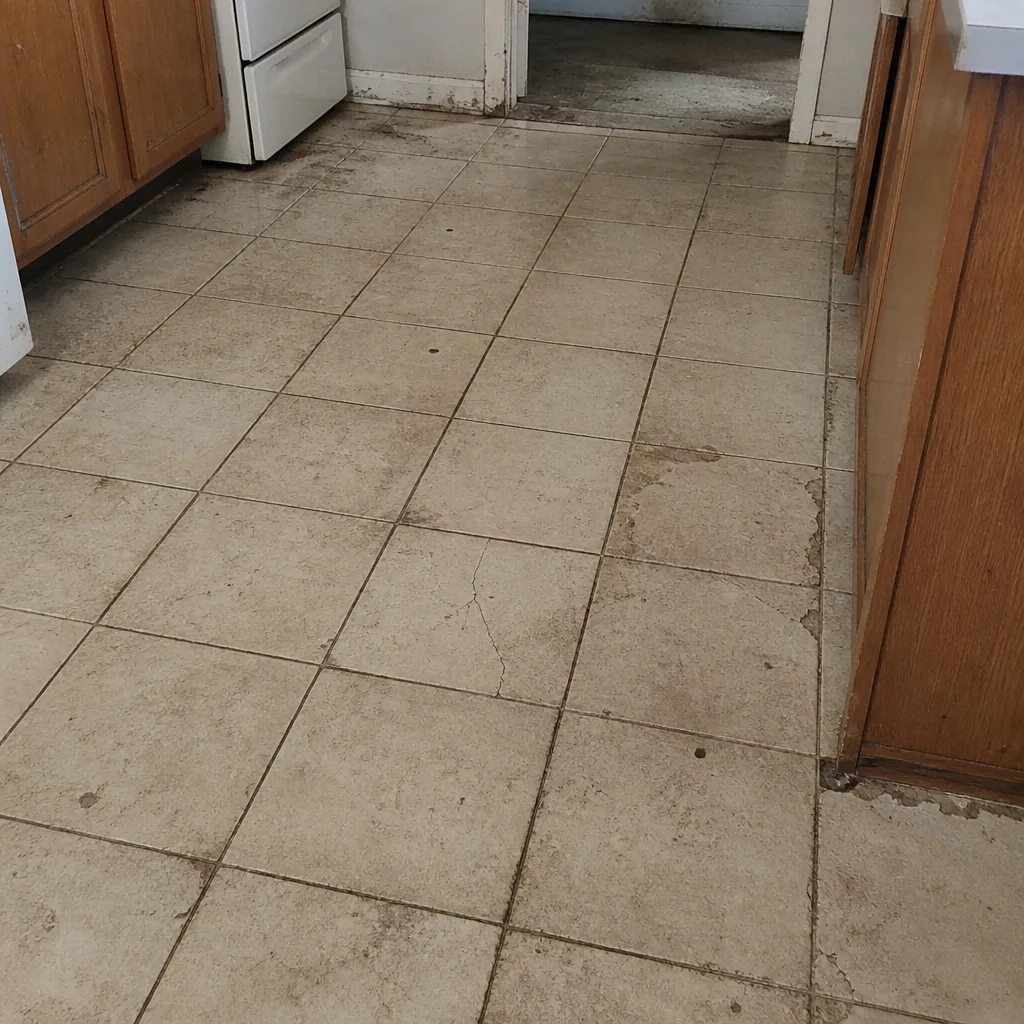 Before
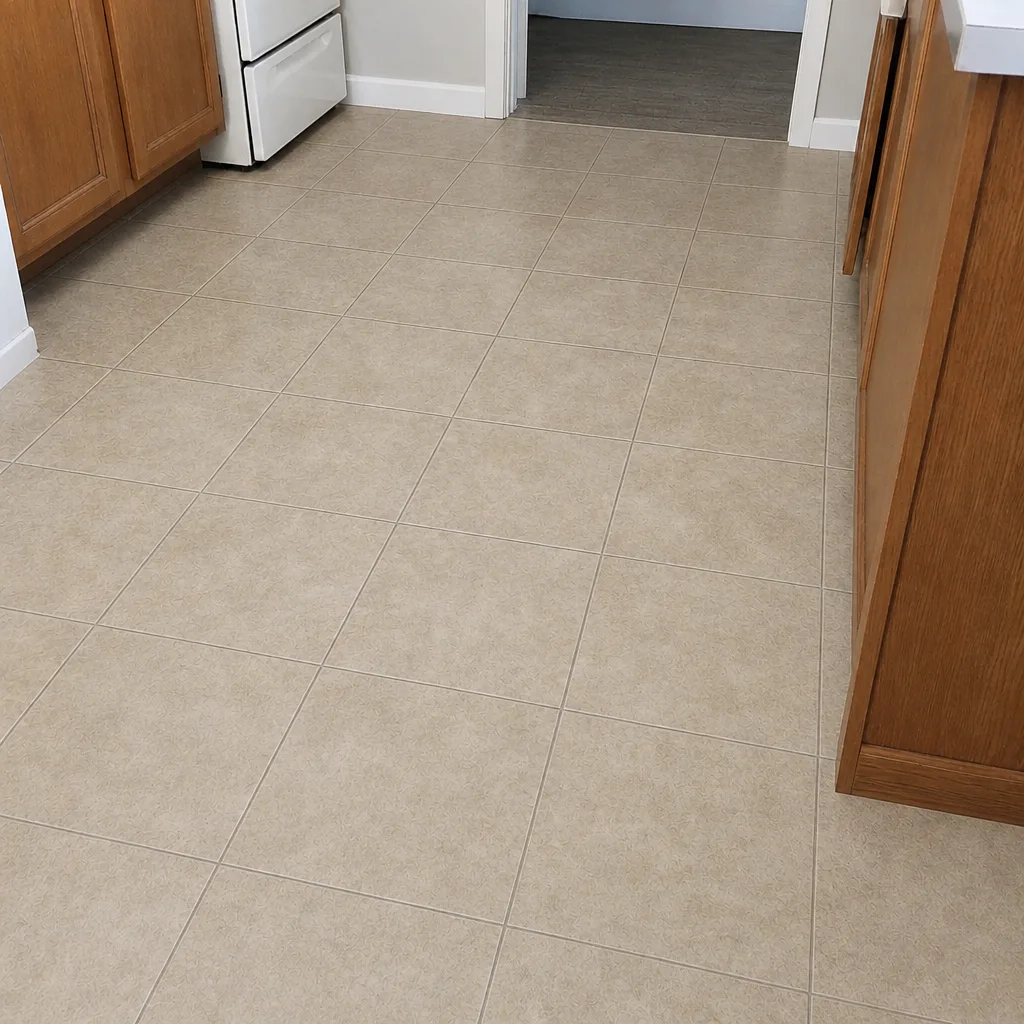 After
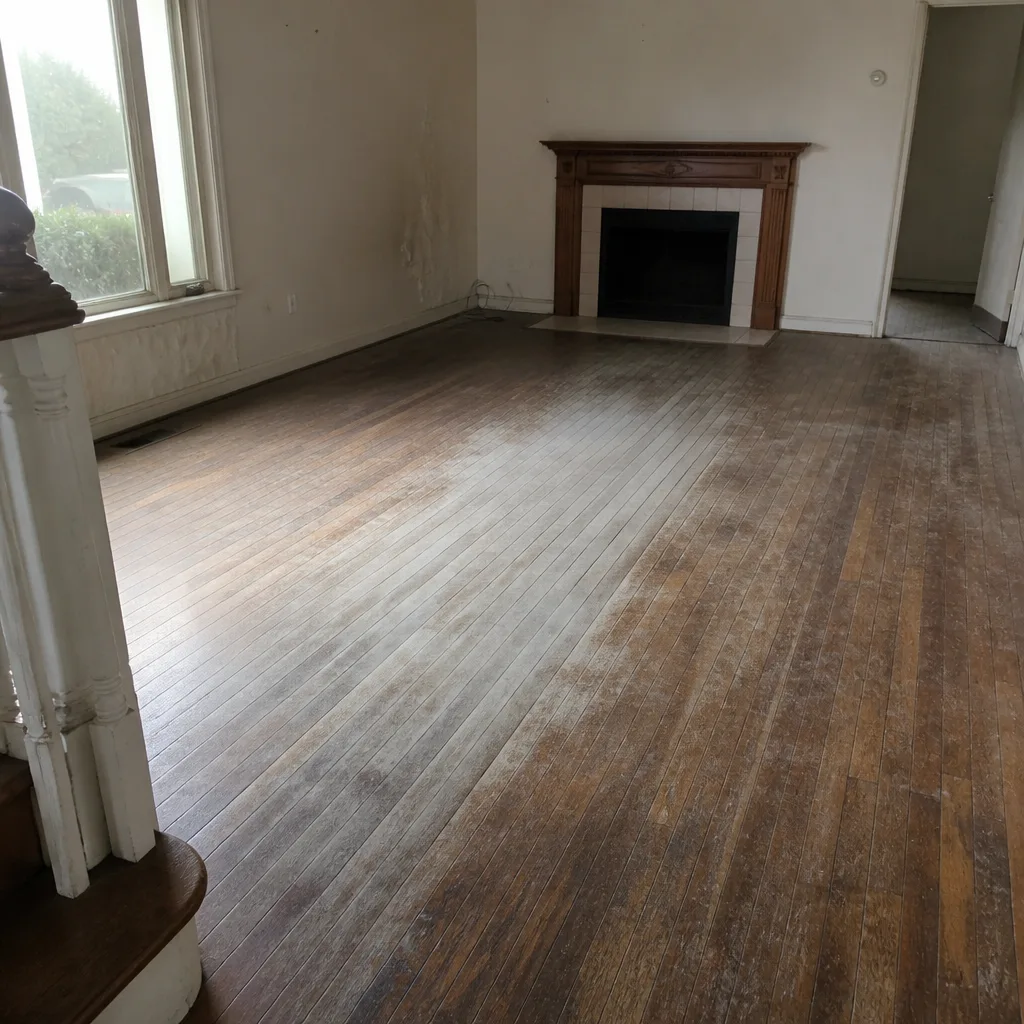 Before
 After
 Before
 After